

Was ist erotisches Wohlbefinden? Ein Leitfaden für intimes Wohlbefinden
TL;DR:
- Erotisches Wohlbefinden ist ein positiver, mehrdimensionaler Zustand, der physische, emotionale, mentale und soziale Aspekte der Intimität umfasst, die auf Selbstwahrnehmung und authentischer Verbindung basieren. Es priorisiert Erfüllung, psychologische Widerstandsfähigkeit und Selbstbestimmung jenseits bloßer klinischer Definitionen von sexueller Gesundheit und Zufriedenheit. Regelmäßige Selbstbewertung und achtsame Praktiken unterstützen das fortlaufende Wohlbefinden, wobei betont wird, dass erotische Gesundheit eine dynamische, lebenslange Bestrebung ist.
Erotisches Wohlbefinden wird als ein positiver, mehrdimensionaler Zustand des Wohlbefindens definiert, der sich auf die Art und Weise bezieht, wie Sie Sexualität und intime Beziehungen erleben, und umfasst physische, emotionale, mentale und soziale Dimensionen, die auf Selbstwahrnehmung, einvernehmlicher Lust und authentischer Verbindung basieren. Der Begriff ist eng verwandt mit dem, was Forscher und Gesundheitsbehörden als sexuelles Wohlbefinden bezeichnen, das weit über das Fehlen von Dysfunktion oder Krankheit hinausgeht. Organisationen wie die Weltgesundheitsorganisation und Forschungsprogramme wie Natsal-SW haben jahrelang Rahmenwerke entwickelt, die Lust, Sicherheit und psychologische Widerstandsfähigkeit als gleich wichtige Säulen der intimen Gesundheit behandeln. Das Verständnis dessen, was erotisches Wohlbefinden in der Praxis bedeutet, gibt Ihnen eine klarere Orientierung für Ihre eigene Selbstfürsorge.
Was ist erotisches Wohlbefinden und warum ist es wichtig?
Erotisches Wohlbefinden ist ein dynamischer Zustand, kein festes Ziel. Es verändert sich mit Ihren Beziehungen, Ihrem Körper, Ihrem Stresslevel und Ihrer Lebensphase. Diese Unterscheidung ist wichtig, weil sie die Diskussion weg von Leistung oder Häufigkeit und hin zu kontinuierlicher, personalisierter Selbstwahrnehmung lenkt.

Das Konzept ist Teil einer breiteren öffentlichen Gesundheitsbewegung, die sexuelles Wohlbefinden als unerlässlich für Gleichheit und ganzheitliche Gesundheit anerkennt, insbesondere für Gruppen, die historisch von biomedizinischen Modellen unterversorgt wurden. Lust, Zustimmung und Freiheit von Zwang sind in diesem Rahmen keine optionalen Extras. Sie sind das Fundament.
Was erotisches Wohlbefinden von älteren Definitionen sexueller Gesundheit unterscheidet, ist seine Betonung von Erfüllung und psychologischer Widerstandsfähigkeit anstatt von klinischen Ergebnissen. Sie können frei von jeder diagnostizierbaren Erkrankung sein und dennoch ein schlechtes erotisches Wohlbefinden erleben, wenn sich Ihr intimes Leben isoliert, erzwungen oder nicht im Einklang mit Ihren Werten anfühlt. Umgekehrt können Sie erotisch aufblühen, ohne einen Partner, ohne häufigen Sex oder innerhalb jeder Beziehungsstruktur, vorausgesetzt, die Kerndimensionen sind vorhanden.
Welche Dimensionen bilden erotisches Wohlbefinden?
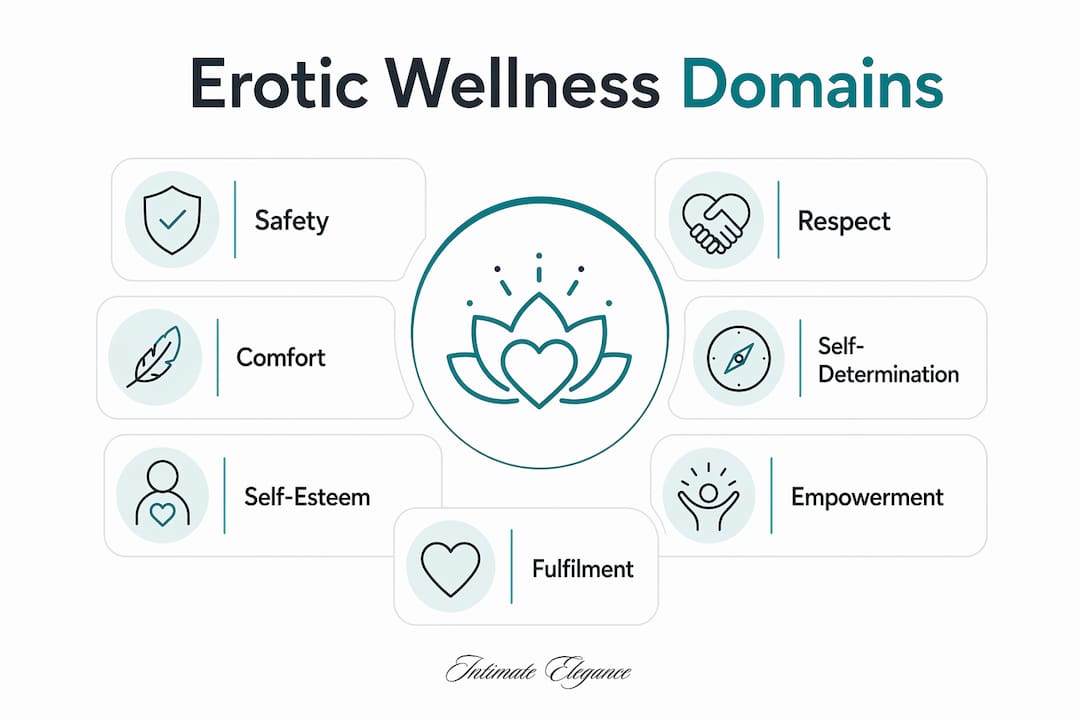
Eine qualitative Studie aus dem Jahr 2025, die über das STORRE-Repositorium der University of Stirling veröffentlicht wurde, identifizierte sieben Kernbereiche des sexuellen Wohlbefindens: Respekt, Selbstwertgefühl, Komfort, Selbstbestimmung, Sicherheit und Geborgenheit, Vergebung und Widerstandsfähigkeit. Diese Bereiche lassen sich direkt auf das erotische Wohlbefinden übertragen und erklären, warum zwei Menschen mit identischen sexuellen Geschichten sehr unterschiedliche Niveaus des Wohlbefindens angeben können.
Die sieben Bereiche erklärt:
- Respekt umfasst, wie Sie von Partnern behandelt werden und wie Sie sich selbst in intimen Kontexten behandeln.
- Selbstwertgefühl bezieht sich auf Ihr Gefühl des Werts als sexuelles und intimes Wesen, unabhängig von der Zustimmung anderer.
- Komfort beschreibt die Leichtigkeit mit dem eigenen Körper, den eigenen Wünschen und den physischen Aspekten der Intimität.
- Selbstbestimmung ist Ihre Fähigkeit, freie, informierte Entscheidungen über Ihr erotisches Leben ohne externen Druck zu treffen.
- Sicherheit und Geborgenheit umfasst sowohl physische Sicherheit als auch die emotionale Sicherheit, verletzlich zu sein.
- Vergebung betrifft die Fähigkeit, Scham, vergangene Erfahrungen oder Beziehungsbrüche zu überwinden, ohne das eigene Selbstgefühl dauerhaft zu schädigen.
- Widerstandsfähigkeit ist die Fähigkeit, sich anzupassen, wenn das erotische Wohlbefinden durch Krankheit, Verlust, Stress oder Lebensübergänge gestört wird.
Die gleiche Forschung bestätigt, dass die Bedeutung jedes Bereichs im Laufe der Zeit in Abhängigkeit von Faktoren wie Stress, körperlichen Veränderungen und Beziehungsdynamiken variiert. Widerstandsfähigkeit beispielsweise wird bei Krankheit oder Trauer weitaus prominenter. Aus diesem Grund kann erotisches Wohlbefinden nicht mit einer einzigen Checkliste beurteilt werden. Es erfordert eine kontinuierliche Reflexion.
Soziale und strukturelle Faktoren prägen diese Dimensionen ebenfalls. Der Zugang zu genauer Sexualaufklärung, kulturelle Einstellungen zur Lust und Diskriminierungserfahrungen beeinflussen alle, wo Sie in den sieben Bereichen stehen. Erotisches Wohlbefinden ist daher niemals rein persönlich. Es ist auch politisch und kontextuell.
Pro-Tipp: Kartieren Sie Ihre sieben Bereiche einmal pro Saison. Bewerten Sie jeden von eins bis zehn und achten Sie darauf, welche sich am meisten mit Ihren Umständen ändern. Diese einfache Überprüfung ist aufschlussreicher als jedes Quiz.
Wie unterscheidet sich erotisches Wohlbefinden von sexueller Gesundheit und Zufriedenheit?
Diese drei Begriffe werden häufig verwechselt, beschreiben aber bedeutungsvoll unterschiedliche Dinge.
| Konzept | Fokus | Umfang |
|---|---|---|
| Sexuelle Gesundheit (WHO) | Fehlen von Krankheiten, Zwang und Dysfunktion | Klinisch und auf Rechten basierend |
| Sexuelle Zufriedenheit | Subjektive Zufriedenheit mit sexuellen Erfahrungen | Enger, erfahrungsbezogen |
| Erotisches Wohlbefinden | Positive Erfüllung in allen Dimensionen des intimen Lebens | Am breitesten, beinhaltet Widerstandsfähigkeit und Selbstbestimmung |
Die WHO definiert sexuelle Gesundheit als einen Zustand des physischen, emotionalen, mentalen und sozialen Wohlbefindens in Bezug auf Sexualität, der einen positiven und respektvollen Ansatz sowie sichere, lustvolle Erfahrungen ohne Zwang erfordert. Dieses 2006 etablierte und 2010 aktualisierte Rahmenwerk bietet das, was Forscher als eine Erlaubnisstruktur für lustorientierte, rechtebejahende Ansätze beschreiben. Es ist grundlegend, aber immer noch primär klinisch ausgerichtet.
Sexuelle Zufriedenheit ist noch enger gefasst. Sie misst, wie zufrieden Sie mit Ihren sexuellen Erfahrungen sind, typischerweise innerhalb einer Beziehung. Hohe Zufriedenheitswerte bedeuten nicht automatisch ein starkes erotisches Wohlbefinden, da Zufriedenheit mit geringem Selbstwertgefühl, mangelndem Körperkomfort oder einem Mangel an echter Selbstbestimmung koexistieren kann.
Erotisches Wohlbefinden sollte hingegen niemals auf Erregungsniveaus oder die Häufigkeit des Geschlechtsverkehrs reduziert werden. Es umfasst Ermächtigung, Selbstbestimmung und psychologische Widerstandsfähigkeit. Eine Person, die selten Sex mit einem Partner hat, aber eine reiche, selbstbewusste und schamfreie Beziehung zu ihrer eigenen Erotik pflegt, erzielt hohe Werte beim erotischen Wohlbefinden. Diese Betrachtungsweise ist sowohl befreiend als auch klinisch bedeutsam.
Wie man im Alltag erotische Selbstfürsorge praktiziert
Erotische Selbstfürsorge ist die bewusste Integration von erotischer Lust in umfassendere Wellness-Routinen, die mit Achtsamkeit und Selbstwahrnehmung statt mit Scham oder Zwang angegangen wird. Sie behandelt Sexualität als eine legitime Dimension der Gesundheit, auf derselben Ebene wie Schlafhygiene oder körperliche Bewegung.
Hier sind vier praktische Wege, um erotische Selbstfürsorge in Ihr Leben zu integrieren:
-
Geplante erotische Zeit. Betrachten Sie intime Zeit, ob alleine oder mit einem Partner, als einen nicht verhandelbaren Termin, anstatt als etwas, das nur geschieht, wenn alles andere erledigt ist. Eine Terminplanung nimmt die Schuld, „Zeit zu finden“, und signalisiert Ihnen selbst, dass diese Dimension der Gesundheit wichtig ist.
-
Achtsame Berührungspraktiken. Körperscan-Meditationen, die für erotisches Bewusstsein angepasst sind, oder langsame, nicht zielorientierte Berührungen trainieren Ihr Nervensystem, Intimität mit Sicherheit und Präsenz statt Leistung zu verbinden. Techniken aus der somatischen Therapie und den Sensate-Focus-Übungen sind in diesem Bereich gut belegt.
-
Erotisches Journaling. Das Schreiben über Wünsche, Grenzen und Erfahrungen ohne Bewertung fördert die Selbstwahrnehmung, die allen sieben Wellness-Bereichen zugrunde liegt. Es ist besonders effektiv, um Scham zu verarbeiten oder Muster zu erkennen, was Sie als erfüllend oder als erschöpfend empfinden.
-
Audit von Zustimmung und Grenzen. Regelmäßiges Überprüfen dessen, wozu Sie zustimmen, und das klare Kommunizieren dieser Grenzen ist nicht nur eine ethische Praxis. Es ist eine direkte Investition in Ihren Bereich der Selbstbestimmung. Paare, die eine explizite, fortlaufende Zustimmung praktizieren, berichten von höherer Beziehungszufriedenheit und größerer erotischer Zuversicht.
Die Überwindung von Scham ist für all diese Praktiken zentral. Kulturelle und religiöse Botschaften stellen erotische Lust oft als indulgent oder gefährlich dar. Die Umdeutung als Gesundheitsverhalten, unterstützt durch öffentliche Gesundheitsforschung, erleichtert das Engagement ohne Schuldgefühle. Sie können mehr darüber lesen, wie Sie Erotik als Selbstfürsorge behandeln und wie Sie diese Denkweise praktisch aufbauen können.
Profi-Tipp: Beginnen Sie mit der Praxis, die sich am wenigsten bedrohlich anfühlt. Erotisches Journaling erfordert keinen Partner und keine Ausrüstung. Fünf Minuten vor dem Schlafengehen genügen, um Ihre Beziehung zu Ihrem eigenen intimen Leben zu verändern.
Warum erotisches Wohlbefinden für Ihre allgemeine Gesundheit wichtig ist
Die Vorteile des erotischen Wohlbefindens reichen weit über das Schlafzimmer hinaus. Die Forschung verbindet erotische Aktivität und positives intimes Wohlbefinden mit reduziertem Stress, besserem Schlaf, verbesserter Stimmung, kardiovaskulären Vorteilen und verbesserter Immunfunktion. Dies sind physiologische Ergebnisse, nicht nur subjektive Gefühle der Zufriedenheit.
Ein Artikel aus dem Jahr 2026 in Nature Reviews Urology argumentiert, dass die Integration von Lust in die sexuelle Gesundheit die klinischen Ergebnisse verbessert, insbesondere für Gruppen, die historisch von biomedizinischen Modellen unterversorgt wurden, einschließlich Frauen und LGBTQ+-Personen. Die Implikation ist bedeutsam. Lust ist kein Luxus-Zusatz zur Gesundheit. Sie ist ein Mechanismus, durch den Gesundheit erhalten und wiederhergestellt wird.
Jenseits des Physiologischen unterstützt erotisches Wohlbefinden das Selbstwertgefühl und die Akzeptanz des Körpers in einer Weise, die sich auf alle Lebensbereiche auswirkt. Menschen mit stärkerem erotischem Wohlbefinden neigen dazu, ein größeres Selbstvertrauen in nicht-sexuellen Kontexten, eine bessere Kommunikation in Beziehungen und ein stabileres Identitätsgefühl zu berichten. Der Zusammenhang zwischen der erotischen Beziehung zum eigenen Körper und der Art und Weise, wie man sich in der Welt verhält, ist in der psychologischen Forschung gut dokumentiert.
„Sexuelles Wohlbefinden ist für die öffentliche Gesundheit unerlässlich, da es Gleichheit fördert und marginalisierte Bevölkerungsgruppen durch trauma-informierte, sex-positive Rahmenwerke unterstützt.“ – PMC Public Health Research, 2024
Für Paare schaffen gemeinsame erotische Wohlbefindenspraktiken eine emotionale Intimität und Vertrauen, die weit über die körperliche Verbindung hinausgehen. Das gemeinsame Erkunden von Möglichkeiten zur Steigerung des sexuellen Wohlbefindens schafft eine gemeinsame Sprache über Verlangen, Grenzen und Erfüllung, die die Beziehung als Ganzes stärkt.
Wichtige Erkenntnisse
Erotisches Wohlbefinden ist ein mehrdimensionaler Zustand positiven intimen Wohlbefindens, der auf sieben Kernbereichen wie Selbstbestimmung, Resilienz und Konsens aufbaut und für die ganzheitliche Gesundheit ebenso zentral ist wie Schlaf oder Ernährung.
| Punkt | Details |
|---|---|
| Sieben-Bereiche-Modell | Respekt, Selbstwertgefühl, Komfort, Selbstbestimmung, Sicherheit, Vergebung und Resilienz prägen alle das erotische Wohlbefinden. |
| Unterscheidung zur sexuellen Gesundheit | Erotisches Wohlbefinden geht über klinische Definitionen hinaus und umfasst Selbstermächtigung, Selbstbestimmung und psychologische Resilienz. |
| Erotische Selbstfürsorge ist praktisch | Geplante intime Zeit, achtsame Berührung und erotisches Journaling sind evidenzbasierte tägliche Praktiken. |
| Gesundheitliche Vorteile sind physiologisch | Die Forschung verbindet positives erotisches Wohlbefinden mit reduziertem Stress, besserem Schlaf und verbesserter Herz-Kreislauf-Gesundheit. |
| Dynamisch, nicht statisch | Bereiche verschieben sich mit den Lebensumständen und erfordern eine kontinuierliche Selbstbewertung statt einer einmaligen Einschätzung. |
Warum ich glaube, dass wir die falsche Frage zum erotischen Wohlbefinden gestellt haben
Die meisten Menschen nähern sich diesem Thema mit der Frage: „Wie habe ich besseren Sex?“ Das ist der falsche Ausgangspunkt. Die nützlichere Frage lautet: „Wie gehe ich mit meiner eigenen Erotik um, sodass sie meine Gesundheit und mein Selbstgefühl unterstützt?“ Diese beiden Fragen führen zu völlig unterschiedlichen Orten.
Meiner Erfahrung nach, in der Arbeit mit Inhalten zum Erwachsenenwohlbefinden und der dahinterstehenden Forschung, ist das größte Hindernis für erotisches Wohlbefinden nicht mangelnde Technik oder Gelegenheit. Es ist Scham. Genauer gesagt, der internalisierte Glaube, dass erotische Lust irgendwie von „echter“ Gesundheit getrennt ist, etwas, das gemanagt oder minimiert statt kultiviert werden sollte. Das Sieben-Bereiche-Modell aus der Forschung der Universität Stirling widerlegt diesen Glauben mit Beweisen. Vergebung und Resilienz stehen aus gutem Grund auf dieser Liste. Sie erkennen an, dass erotisches Wohlbefinden im Laufe eines Lebens gestört, wiederhergestellt und neu aufgebaut wird.
Die andere Sache, die ich durchweg unterschätzt finde, ist, wie sehr erotisches Wohlbefinden ein Solo-Projekt ist, bevor es ein Partner-Projekt ist. Selbstbestimmung, Selbstwertgefühl und Komfort mit dem eigenen Körper sind alles interne Bereiche. Kein Partner kann sie Ihnen liefern. Die erotischsten Menschen, denen ich begegnet bin, sind diejenigen, die zuerst die innere Arbeit geleistet und dann diese Selbstwahrnehmung in ihre Beziehungen eingebracht haben.
Zustimmung und Sicherheit sind in all dem nicht verhandelbar. Nicht als rechtliche Formalität, sondern als strukturelle Bedingungen, die echtes erotisches Wohlbefinden ermöglichen. Ohne sie bauen Sie kein Wohlbefinden auf. Sie managen Risiken.
— Bartosz
Entdecken Sie erotisches Wohlbefinden mit Intimate-elegance

Intimate-elegance ist eine EU-weite Plattform für Erwachsenen-Wellness, die auf der Idee basiert, dass Qualität, Privatsphäre und echte Selbstfürsorge zusammengehören. Egal, ob Sie beginnen, erotische Selbstfürsorge zu erkunden, oder eine bestehende Praxis vertiefen möchten, das kuratierte Sortiment an Premium-Vibratoren, Paarzubehör und Intimprodukten bei Intimate-elegance wurde entwickelt, um Ihr Wohlbefinden diskret und elegant zu unterstützen. Jede Bestellung wird anonym in der gesamten EU versandt, mit sicheren Transaktionen und ohne Kompromisse bei der Qualität. Entdecken Sie die gesamte Kollektion und finden Sie die Werkzeuge, die zu Ihrer erotischen Wellness-Praxis passen, in jedem Stadium, in dem Sie sich befinden.
Häufig gestellte Fragen
Was ist die Definition von erotischem Wohlbefinden?
Erotisches Wohlbefinden ist ein positiver, mehrdimensionaler Zustand des Wohlbefindens in Bezug auf Sexualität und Intimität, der physische, emotionale, mentale und soziale Dimensionen umfasst. Es basiert auf Selbstwahrnehmung, einvernehmlicher Lust, Sicherheit und authentischer Verbindung, anstatt nur auf dem Fehlen von Dysfunktionen.
Wie unterscheidet sich erotisches Wohlbefinden von sexueller Gesundheit?
Sexuelle Gesundheit, wie von der WHO definiert, konzentriert sich auf einen rechtsbasierten, klinischen Ansatz, frei von Krankheiten und Zwang. Erotisches Wohlbefinden ist breiter gefasst und umfasst psychologische Widerstandsfähigkeit, Selbstbestimmung, Körperkomfort und fortlaufende Erfüllung in sieben verschiedenen Bereichen.
Kann man erotisches Wohlbefinden ohne Partner praktizieren?
Ja. Mehrere Kernbereiche des erotischen Wohlbefindens, einschließlich Selbstwertgefühl, Selbstbestimmung und Komfort mit dem eigenen Körper, sind vollständig innerlich. Solo-Praktiken wie achtsame Berührung, erotisches Journaling und absichtliche Selbstbefriedigung werden als legitime und effektive erotische Selbstfürsorge anerkannt.
Welche gesundheitlichen Vorteile hat erotisches Wohlbefinden?
Forschungsergebnisse verbinden positives erotisches Wohlbefinden mit reduziertem Stress, verbessertem Schlaf, besserer Stimmung, kardiovaskulären Vorteilen und verbesserter Immunfunktion. Eine Studie aus dem Jahr 2026 in Nature Reviews Urology ergab auch, dass lustzentrierte Ansätze die Ergebnisse für Gruppen verbessern, die historisch von biomedizinischen Gesundheitsmodellen unterversorgt waren.
Wie fange ich an, erotisches Wohlbefinden aufzubauen?
Beginnen Sie mit der für Sie am wenigsten bedrohlichen Übung, typischerweise mit erotischem Journaling oder einer Körperwahrnehmungsübung. Ermitteln Sie Ihre eigenen sieben Bereiche (Respekt, Selbstwertgefühl, Komfort, Selbstbestimmung, Sicherheit, Vergebung, Resilienz) und identifizieren Sie, welche sich am schwächsten anfühlen. Diese Überprüfung gibt Ihnen einen klaren, personalisierten Ausgangspunkt.
Empfohlen
- Intime Wellness: Was sie bedeutet und warum sie wichtig ist – Intimate Elegance
- Wege zur Steigerung des sexuellen Wohlbefindens: Ihr Leitfaden für 2026 – Intimate Elegance
- Ihre ultimative Checkliste für intime Wellness: Gesundheit und Privatsphäre – Intimate Elegance
- Entdecken Sie erotische Accessoires: Intimität stilvoll erhöhen – Intimate Elegance