

Why use body-safe materials for intimate products
TL;DR:
- Using body-safe materials such as platinum-cured silicone, borosilicate glass, or surgical-grade stainless steel protects sensitive tissues from chemical leaching and bacterial contamination. Porous materials like TPE and jelly rubber cannot be fully sterilized and pose higher health risks over time. The term “medical-grade” is unregulated in the adult industry, making specific material verification essential for safe product selection.
Body-safe materials are defined as substances safe for prolonged contact with sensitive skin and mucous membranes because they do not leach harmful chemicals, are non-porous, and are hypoallergenic. The industry gold standard is platinum-cured silicone, which meets the chemical inertness requirements outlined in biocompatibility frameworks such as ISO 10993. Understanding why use body-safe materials matters because intimate products contact some of the most absorbent, sensitive tissue in the body. A product made from lower-grade materials can introduce phthalates, plasticisers, and bacteria directly into those tissues. For individuals and couples who care about their health as much as their pleasure, material choice is not a minor detail. It is the most consequential decision in any intimate product purchase.
Why use body-safe materials: the properties that actually protect you
The single most protective property in any intimate material is non-porosity. Bacteria and viruses cannot penetrate non-porous surfaces, which is why this characteristic sits at the centre of intimate wellness science. A porous surface, by contrast, traps pathogens in microscopic crevices that no amount of soap and water can reach.
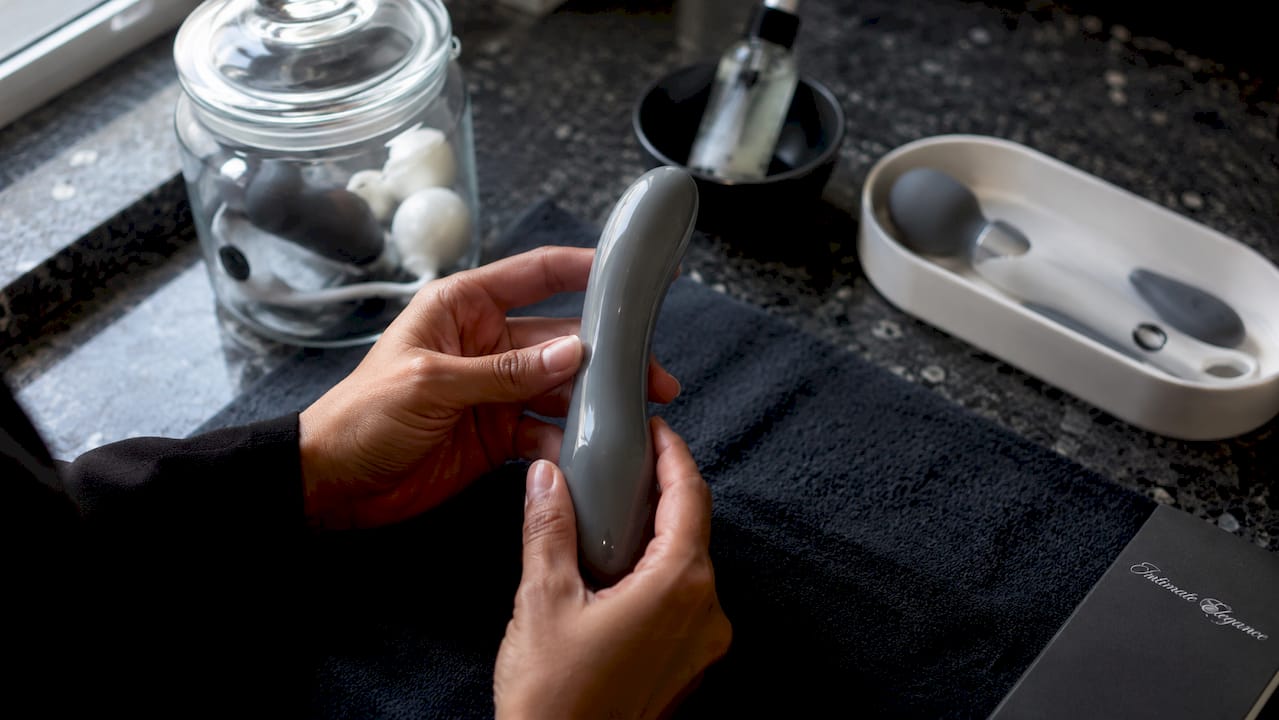
Chemical inertness is the second critical property. Body-safe materials do not react with body fluids, lubricants, or cleaning agents. They do not leach plasticisers such as phthalates, which are compounds linked to endocrine disruption. Phthalates were widely used in jelly rubber products for decades before their risks became broadly understood, and they remain present in many lower-grade products sold today.
Hypoallergenic composition rounds out the three core properties. Materials that trigger allergic reactions or skin irritation are unsuitable for intimate use regardless of their other qualities. Platinum-cured silicone, borosilicate glass, and surgical-grade stainless steel all meet this standard. They are chemically stable, non-reactive, and well-tolerated by sensitive tissue.
Key properties to look for in body-safe intimate materials:
- Non-porous surface: prevents bacterial and viral retention between uses
- Chemical inertness: no leaching of plasticisers, dyes, or solvents
- Hypoallergenic composition: no latex, phthalates, or reactive compounds
- Durability under sterilisation: retains integrity when boiled or disinfected
- Odourless or near-odourless: absence of strong chemical smell at room temperature
Pro Tip: If a product has a strong rubbery or chemical smell straight from the packaging, that odour signals the presence of plasticisers. Lower-grade materials often emit strong chemical odours linked to endocrine-disrupting compounds. Return it.
How do common intimate product materials compare?
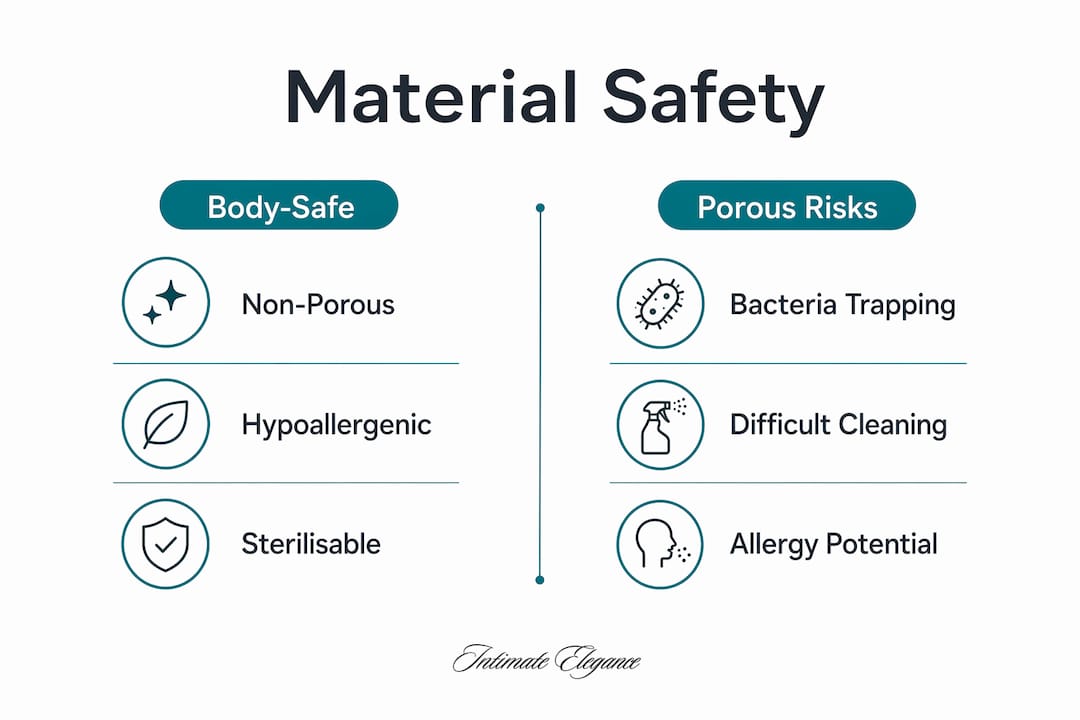
Not all materials marketed as safe carry equal protection. The differences between them affect hygiene, longevity, and your body’s response over time.
Platinum-cured silicone is the benchmark. Its curing process uses a platinum catalyst that creates a fully cross-linked polymer network, making it non-porous, non-leaching, and safe for boiling sterilisation. Tin-cured silicone looks similar but degrades with heat and is not considered equivalent. Platinum-cured silicone is soft, flexible, and available in a wide range of firmness levels, which makes it the most versatile body-safe option.
Borosilicate glass and surgical-grade stainless steel are both non-porous and hypoallergenic. They can be fully sterilised, are compatible with all lubricant types, and do not degrade over time. Their firmness suits specific preferences and they are particularly well-suited to people with chemical sensitivities.
TPE and TPR (thermoplastic elastomers and rubbers) are porous. Porous materials like TPE, TPR, and jelly rubber cannot be fully sterilised because they trap bacteria in their microscopic structure. Even thorough cleaning leaves pathogens behind. These materials are significantly cheaper to manufacture, which explains their prevalence in lower-priced products.
| Material | Non-porous | Hypoallergenic | Sterilisable | Relative cost |
|---|---|---|---|---|
| Platinum-cured silicone | Yes | Yes | Yes (boiling) | High |
| Borosilicate glass | Yes | Yes | Yes (boiling) | Medium-high |
| Surgical-grade stainless steel | Yes | Yes | Yes (boiling) | Medium-high |
| TPE / TPR | No | Variable | No | Low |
| Jelly rubber | No | No | No | Very low |
Premium platinum-cured silicone costs 3 to 5 times more than lower-grade porous alternatives. That price gap reflects genuine differences in manufacturing, safety testing, and material purity, not marketing.
Pro Tip: Check the advantages of silicone toys before buying. Silicone’s flexibility, durability, and hypoallergenic properties make it the most practical body-safe choice for most people.
What does “medical-grade” actually mean on an intimate product?
“Medical-grade” is one of the most misused phrases in the adult product industry. The term is unregulated in the adult product sector and carries no legal requirement for safety testing or material purity. Any manufacturer can print it on packaging without consequence.
The phrase originates from the regulated medical device industry, where ISO 10993 provides a framework for evaluating the biocompatibility of materials used in implants and surgical tools. That standard does not automatically apply to intimate products, even when brands invoke it. The label sounds authoritative. It is not.
What actually matters is the specific material and its curing process. “Platinum-cured silicone” is a verifiable claim. It describes a manufacturing method with measurable outcomes: non-porosity, chemical stability, and heat resistance. “Medical-grade silicone” describes nothing verifiable without additional detail.
How to spot misleading material claims:
- The product lists “medical-grade” without specifying platinum-cured or tin-cured silicone
- No care instructions mention boiling or sterilisation
- The product has a noticeable chemical or rubbery smell
- The price is significantly lower than comparable silicone products
- The brand cannot name the specific material grade or supplier
Experts emphasise that “medical-grade” claims must be supported by platinum-cure verification to mean anything in intimate wellness. If a brand cannot tell you the curing method, treat the claim as unverified. The adult product terminology guide from Intimate-elegance breaks down these distinctions clearly for anyone who wants to go deeper.
How to choose and care for body-safe intimate products
Choosing a genuinely safe product starts before you add anything to your basket. The material must be named specifically, not described in vague terms. Platinum-cured silicone, borosilicate glass, and surgical-grade stainless steel are the three categories worth trusting. Everything else requires scrutiny.
Follow these steps when evaluating a product:
- Check the material name. Look for “platinum-cured silicone,” “borosilicate glass,” or “surgical-grade stainless steel.” Reject vague terms like “body-safe rubber” or “premium silicone” without further specification.
- Read the care instructions. Reputable brands provide detailed care instructions and support boiling or sterilisation for their silicone products. If instructions say only “wipe clean,” the material is likely porous.
- Assess the price. A genuine platinum-cured silicone product costs more to make. If the price seems too low for the claimed material, it probably is.
- Smell the product. A strong chemical odour at room temperature is a red flag. Body-safe materials are largely odourless.
- Research the brand. Brands that publish material certifications, testing information, or detailed product specifications are more likely to sell what they claim.
For cleaning, regular soap and warm water suffices for non-porous body-safe materials. Platinum-cured silicone, glass, and stainless steel can also be boiled for full sterilisation. Porous products require more care and still pose contamination risks even after thorough cleaning. That risk does not diminish over time. It accumulates.
Pro Tip: Store body-safe silicone products separately from other materials. Silicone can react with certain plastics and lower-grade rubbers on contact, causing surface degradation. A clean cotton pouch or the original packaging works well.
The best sex toy materials guide from Intimate-elegance covers specific product recommendations if you want practical examples alongside the principles.
Key takeaways
Body-safe materials protect intimate health by combining non-porosity, chemical inertness, and hypoallergenic composition, with platinum-cured silicone, borosilicate glass, and surgical-grade stainless steel as the only fully verifiable options.
| Point | Details |
|---|---|
| Non-porosity is non-negotiable | Porous materials like TPE and jelly rubber trap bacteria permanently, regardless of cleaning effort. |
| Platinum-cured silicone is the benchmark | Its cross-linked polymer structure makes it non-leaching, sterilisable, and safe for sensitive tissue. |
| “Medical-grade” is unverified without more detail | The term is unregulated; only specific claims like “platinum-cured” carry verifiable meaning. |
| Price reflects material safety | Genuine platinum-cured silicone costs 3 to 5 times more than lower-grade alternatives. |
| Care instructions reveal material quality | Brands that support boiling or sterilisation are signalling genuine non-porous materials. |
The thing most people get wrong about material safety
By Bartosz
The most common mistake I see is people treating material safety as a secondary concern, something to check after colour, size, and price. That order of priorities is backwards. The material determines whether a product is safe to use at all. Everything else is preference.
What surprises people most is how little protection the word “silicone” actually provides on its own. I have read through enough product specifications to know that “silicone” on a label can mean platinum-cured, tin-cured, or a silicone-blend with porous fillers. Those are not equivalent. The curing method is the detail that matters, and most product listings do not mention it unless the brand is confident in what they are selling.
The other thing worth saying plainly: the intimate wellness industry is not tightly regulated in most markets. That means the burden of verification sits with the buyer. Brands that publish material certifications, name their curing process, and provide sterilisation instructions are telling you something important about how seriously they take your health. Brands that do not are also telling you something.
Investing in genuine body-safe materials results in products with better comfort, longer lifespan, and lower health risk. That is not a marketing claim. It is the straightforward outcome of buying something made properly. The price difference between a porous product and a platinum-cured silicone one is real, but so is the difference in what you are putting in contact with your body.
— Bartosz
Premium body-safe products at Intimate-elegance
Intimate-elegance curates its product range with material quality as a primary filter. Every product in the collection is selected for safety, hygiene, and the kind of quality that holds up over time, not just on first use.
The TOYJOY Amazing Pleasure Sex Toy Kit is a strong starting point for anyone building a body-safe collection. It brings together premium materials and thoughtful design in a single package, with the quality assurance that comes from a trusted manufacturer. Intimate-elegance ships discreetly across the EU, with secure transactions and fast delivery. If you want to shop with confidence and know exactly what you are buying, the full range is waiting for you at intimate-elegance.eu.
FAQ
What is a body-safe material?
A body-safe material is non-toxic, non-porous, and hypoallergenic, making it safe for prolonged contact with sensitive skin and mucous membranes. Platinum-cured silicone, borosilicate glass, and surgical-grade stainless steel are the most widely recognised examples.
What is body-safe silicone?
Body-safe silicone refers specifically to platinum-cured silicone, which uses a platinum catalyst to create a fully cross-linked, non-porous polymer. Tin-cured silicone and silicone blends do not meet the same standard and should not be treated as equivalent.
Why are porous materials a health risk in intimate products?
Porous materials like TPE, TPR, and jelly rubber trap bacteria and pathogens in microscopic crevices that cleaning cannot reach. That contamination accumulates with each use, increasing the risk of infection and irritation over time.
Does “medical-grade” guarantee a product is body-safe?
No. The term “medical-grade” is unregulated in the adult product industry and carries no legal requirement for safety testing. Only specific material claims, such as platinum-cured silicone with verifiable certifications, provide meaningful assurance.
How should I clean body-safe intimate products?
Non-porous materials like platinum-cured silicone, glass, and stainless steel can be cleaned with soap and warm water or boiled for full sterilisation. Porous materials cannot be fully sterilised regardless of cleaning method, which is why non-porous options are strongly preferred.