

What is sexual confidence and how to build it
TL;DR:
- Sexual confidence is about feeling secure and authentic with your sexuality through self-acceptance and communication. It depends on emotional safety and body image, not on performance or body perfection. Improving confidence involves developing emotional intelligence, understanding your body, and practicing honest dialogue with partners.
Sexual confidence is defined as a deep, stable sense of security and comfort with your own sexuality, expressed through authentic self-acceptance and open communication with partners. It is not about performance, body perfection, or frequency of sex. Research confirms that true sexual confidence centres on emotional safety and effective communication, not desire level or physical ability. Understanding this distinction is the first step toward building something lasting. This article covers the psychology behind sexual self-esteem, what causes low sexual confidence, and practical ways to improve it.
What is sexual confidence, and why does it matter?
Sexual confidence is the psychological state in which you feel at ease with your desires, your body, and your intimate relationships. The formal term used in psychology and sexual health research is sexual self-esteem, which refers to your overall evaluation of yourself as a sexual person. Both terms describe the same core experience: feeling worthy, safe, and capable of authentic intimacy.

The importance of sexual confidence extends well beyond the bedroom. Self-esteem and sexual satisfaction reinforce each other in a positive feedback loop. When you feel good about yourself as a sexual person, you communicate your needs more clearly. That communication leads to more satisfying experiences, which in turn strengthens your confidence. The cycle builds on itself over time.
Sexual confidence also affects how you handle vulnerability. People with strong sexual self-esteem set boundaries without guilt, express preferences without shame, and recover from awkward or disappointing encounters without catastrophising. Those without it often avoid intimacy altogether, or push through it while feeling disconnected and anxious.
How self-esteem and body image shape your sexual confidence
Body image is one of the most powerful forces acting on sexual self-esteem. Research shows that 48% of women doubt their vulva’s appearance, and approximately 25% report a negative overall relationship with their genitalia. That level of self-doubt creates a direct barrier to comfort and pleasure during intimacy.
The psychological mechanism is straightforward. When you feel ashamed or uncertain about your body, your attention during sex shifts inward. Instead of focusing on sensation and connection, you monitor yourself. Psychologists call this spectatoring, and it reliably reduces both arousal and satisfaction.
Emotional intelligence plays a significant role in breaking this pattern. Higher emotional intelligence correlates with reduced relationship anxiety, greater comfort with physical touch, and higher sexual satisfaction. Emotionally intelligent people are better at identifying and naming their feelings, which makes it easier to separate a passing moment of insecurity from a fixed belief about their worth.
Key factors that link body image to sexual self-esteem:
- Negative genital self-image reduces willingness to be seen and touched, limiting intimacy.
- Media-driven appearance standards create unrealistic benchmarks that most bodies cannot meet.
- Shame around anatomy blocks the curiosity and exploration that build genuine comfort.
- Low general self-esteem amplifies insecurities during vulnerable moments like sex.
Pro Tip: Spend time in front of a mirror without judgement, simply observing your body with curiosity rather than criticism. Research on shame-free self-exploration shows that anatomical familiarity is a foundational step toward genuine sexual confidence.
What causes low sexual confidence?
Low sexual confidence rarely has a single cause. It typically develops from a combination of psychological patterns, past experiences, and social pressures. Understanding the specific mechanisms helps you address them directly rather than treating the symptom.
Common causes include:
- Unconscious defence mechanisms. When women experience long-term difficulty reaching orgasm, the mind often adapts by devaluing its importance. Research shows 68% of women with persistent orgasm difficulties convince themselves they do not need it. This protects self-worth in the short term but deepens disconnection from pleasure over time.
- Performance anxiety. The pressure to perform, satisfy, or appear a certain way during sex creates a mental load that overrides physical sensation. This is one of the leading psychological contributors to erectile dysfunction in men.
- Impulse control difficulties. Around 23.8% of men report months-long struggles with controlling sexual impulses, often using sex as an escape from stress. This pattern signals low sexual confidence, not high desire.
- Absence of emotional safety. Sexual confidence cannot develop in relationships where expressing desires or boundaries feels risky. Without trust, vulnerability is impossible.
- Negative past experiences. Criticism from partners, sexual rejection, or experiences of shame leave lasting impressions on how you perceive yourself sexually.
The critical insight here is that sexual confidence is distinct from sexual performance. Someone who is sexually active and apparently confident can still carry deep insecurities. Conversely, someone with limited experience can possess genuine sexual self-esteem. The difference lies in emotional regulation, not activity level.
Effective ways to improve sexual confidence
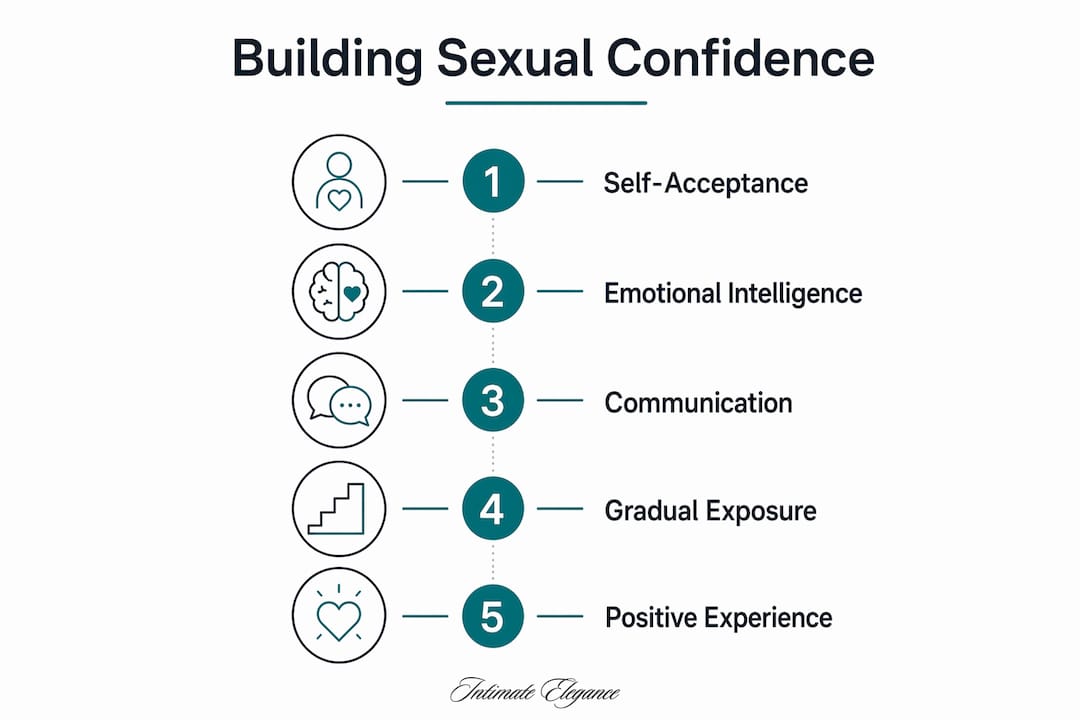
Building sexual self-esteem is a gradual process. The strategies below are grounded in psychological research and work best when practised consistently rather than applied as quick fixes.
-
Develop your emotional intelligence. Learning to identify, name, and communicate your feelings is the single most transferable skill for sexual confidence. Emotionally intelligent people satisfy personal and partner needs more effectively, which creates a positive cycle of satisfaction and growing self-worth. Practise naming your emotional state before and after intimate encounters.
-
Build anatomical familiarity. Active, shame-free exploration of your own body removes the mystery that feeds insecurity. Understanding your anatomy is not indulgent. It is a practical foundation for knowing what you enjoy and communicating it to a partner. You can read more about this in Intimate-elegance’s guide on adult toys and deeper intimacy.
-
Create emotional safety with your partner. Trust is the environment in which sexual confidence grows. This means having explicit conversations about desires and limits outside of sexual moments, not just during them. Regular, low-stakes communication normalises the dialogue.
-
Practise mindfulness during intimacy. Mindfulness reduces spectatoring by anchoring your attention to physical sensation rather than self-evaluation. Even five minutes of focused breathing before sex can shift your mental state from anxious monitoring to present awareness.
-
Set realistic expectations. Sexual confidence for women and men alike is undermined by the belief that sex should always be spontaneous, effortless, and mutually satisfying. Real intimacy includes awkward moments, mismatched moods, and ongoing negotiation. Accepting this reduces the pressure that fuels anxiety.
-
Use self-compassion after difficult experiences. Treating yourself with the same kindness you would offer a friend after a disappointing encounter prevents shame from calcifying into a fixed belief about your worth.
Pro Tip: Gradual exposure works. If full intimacy feels overwhelming, start with smaller acts of physical vulnerability: holding eye contact, asking for what you want during a massage, or wearing something that makes you feel attractive. Intimate-elegance’s guide on lingerie and confidence offers practical ideas for using clothing as a confidence tool.
How sexual experiences and confidence shape each other
Sexual confidence and sexual experience exist in a dynamic, two-way relationship. Positive experiences strengthen confidence, and stronger confidence creates conditions for better experiences. This is not a linear progression. It is a cycle that can be entered at any point.
The key driver of this cycle is communication. When you express a preference and a partner responds positively, your sense of sexual self-worth rises. That rise makes it easier to communicate the next time. Over time, the habit of honest expression becomes the foundation of a genuinely satisfying intimate life. Research confirms that positive self-esteem and sexual satisfaction mutually reinforce each other in exactly this way.
Authentic self-expression also protects confidence during negative experiences. When you know your own desires and boundaries clearly, a disappointing encounter does not destabilise your sense of self. You can attribute it to circumstance rather than personal inadequacy.
| Self-esteem level | Communication style | Typical sexual outcome |
|---|---|---|
| Low | Avoidant or passive | Unmet needs, growing disconnection |
| Moderate | Inconsistent | Variable satisfaction, occasional anxiety |
| High | Direct and open | Consistent satisfaction, stronger intimacy |
The table above illustrates a pattern, not a fixed rule. Self-esteem fluctuates, and so does communication. The goal is not to reach a permanent high but to build the skills that make recovery from low points faster. Exploring resources like Intimate-elegance’s guide on sexual satisfaction can help you understand the broader picture of what drives fulfilment in intimate relationships.
Key takeaways
Sexual confidence is built through emotional intelligence, body acceptance, and honest communication, not through performance or physical appearance.
| Point | Details |
|---|---|
| Definition matters | Sexual confidence is emotional security with your sexuality, not a measure of performance or experience. |
| Body image is central | Negative genital self-image directly reduces comfort and satisfaction during intimacy. |
| Defence mechanisms hide the problem | Devaluing orgasm or using sex as escape are signs of low confidence, not high desire. |
| Emotional intelligence accelerates growth | Higher emotional intelligence reduces anxiety and improves both body satisfaction and sexual fulfilment. |
| Communication creates the cycle | Expressing desires openly leads to better experiences, which in turn strengthens sexual self-esteem. |
What I have learned about sexual confidence after years of writing about intimacy
The most persistent misconception I encounter is that sexual confidence belongs to a certain type of person: extroverted, physically attractive, and highly experienced. That belief is wrong, and it actively prevents people from doing the work that actually builds confidence.
Real sexual self-esteem is quiet. It shows up in the ability to say “I don’t enjoy that” without apologising, or to ask for something specific without rehearsing the request for three days. It is not about being fearless. It is about acting despite discomfort, and doing so often enough that the discomfort shrinks.
The research on unconscious defence mechanisms genuinely surprised me. The idea that the mind will convince you that you do not want something you actually want, simply to protect your self-worth, is both fascinating and sobering. It means that some people are not indifferent to pleasure. They have simply learned to suppress the desire for it because pursuing it felt too risky.
What I find most encouraging is that the cycle between confidence and experience can be entered from almost any point. You do not need a perfect relationship, a perfect body, or a history of positive sexual experiences to start building sexual self-esteem. You need curiosity, a willingness to be honest with yourself, and patience. Those are things anyone can practise today.
— Bartosz
Products at Intimate-elegance that support your confidence
Building sexual confidence often benefits from having the right tools for exploration and pleasure. Intimate-elegance offers a carefully selected range of products designed to support exactly that.

The TOYJOY Amazing Pleasure Sex Toy Kit is a curated set built for those who want to explore their body and preferences at their own pace, without pressure. For couples looking to deepen connection and communication, the Addicted Toys Double Penis Ring with Clitoral Stimulator encourages shared pleasure and open dialogue. Every order ships discreetly across the EU, with secure payment and full privacy. Quality and comfort are guaranteed across the entire catalogue.
FAQ
What is sexual confidence in simple terms?
Sexual confidence is the feeling of being comfortable and secure with your own sexuality, desires, and body. It centres on self-acceptance and honest communication, not on performance or physical appearance.
What causes low sexual confidence?
Low sexual confidence typically stems from negative body image, performance anxiety, past experiences of shame or rejection, and a lack of emotional safety in relationships. Unconscious defence mechanisms, such as convincing yourself you do not need orgasm, can also mask and deepen the problem.
How can women build sexual confidence?
Sexual confidence for women grows through shame-free body exploration, developing emotional intelligence, and practising open communication with partners. Research shows that emotionally intelligent women report significantly higher satisfaction with both their bodies and their intimate lives.
Is sexual confidence the same as sexual experience?
No. Sexual confidence is an internal sense of security and self-worth, while sexual experience refers to the number or variety of encounters. Someone with extensive experience can still carry deep insecurities, and someone with limited experience can possess genuine sexual self-esteem.
Can sexual confidence improve over time?
Yes. Sexual self-esteem improves through consistent practice: building emotional intelligence, communicating desires clearly, and accumulating positive intimate experiences. The relationship between confidence and satisfaction is reciprocal, meaning each improvement reinforces the other.