

Sustainable sex toys: Your 2026 guide to eco-friendly intimacy
You might assume eco-friendly sex toys compromise on pleasure or quality, but that’s a misconception. In 2026, sustainable intimate products combine body-safe materials, ethical manufacturing, and innovative design to deliver exceptional experiences while protecting the planet. This guide reveals how to identify genuinely sustainable sex toys, understand key certifications, and make informed choices that align with your values. You’ll discover practical maintenance tips, emerging innovations, and actionable steps to enhance intimacy responsibly without sacrificing satisfaction or safety.
Table of Contents
- Understanding What Makes Sex Toys Sustainable
- Recognizing Trustworthy Certifications And Standards
- Sustainable Practices: Maintenance, Disposal, And Lifespan Of Sex Toys
- Innovations And Future Trends In Sustainable Sex Toys
- Explore Sustainable Intimacy Products At Intimate Elegance
- What Questions Do People Ask About Sustainable Sex Toys?
Key takeaways
| Point | Details |
|---|---|
| Sustainable materials matter | Eco-friendly sex toys use body-safe silicone, stainless steel, glass, and biodegradable materials that protect your health and the environment. |
| Certifications verify claims | Look for GOTS, OEKO-TEX, and cruelty-free labels to confirm products meet recognized ethical and environmental standards. |
| Proper care extends lifespan | Regular cleaning with gentle products and correct storage significantly reduces waste by keeping toys functional for years. |
| Innovation drives sustainability | New designs and materials are emerging that balance pleasure, safety, and environmental responsibility for conscious consumers. |
Understanding what makes sex toys sustainable
Sustainable sex toys are made from non-toxic, eco-friendly materials and involve ethical production processes that minimize environmental harm. These products prioritize both your wellbeing and the planet’s health through thoughtful design and manufacturing choices. Unlike conventional toys that may contain phthalates, toxic dyes, or petroleum-based plastics, sustainable options focus on materials that are safe for your body and won’t leach harmful chemicals during use.
The most common eco-friendly materials include medical-grade silicone, stainless steel, borosilicate glass, and natural substances like wood or stone. Medical-grade silicone stands out because it’s non-porous, hypoallergenic, and incredibly durable, lasting for years with proper care. Stainless steel and glass offer similar benefits while being fully recyclable at end of life. Some manufacturers now experiment with biodegradable elastomers derived from plant sources, though these remain less common in 2026.
Ethical manufacturing extends beyond materials to encompass fair labor practices, reduced carbon footprints, and transparent supply chains. Companies committed to sustainability often use renewable energy in production facilities, minimize packaging waste, and ensure workers receive fair wages in safe conditions. This holistic approach means your purchase supports both environmental conservation and human dignity.
Key characteristics of sustainable sex toys include:
- Body-safe materials free from phthalates, BPA, and toxic additives
- Durable construction designed for long-term use rather than disposability
- Minimal, recyclable packaging made from post-consumer materials
- Ethical labor practices throughout the supply chain
- Energy-efficient manufacturing processes with reduced emissions
- Transparent ingredient and sourcing information from manufacturers
Pro Tip: When using lube with adult toys, choose water-based formulas for silicone products to preserve material integrity and extend product lifespan, maximizing your sustainable investment.
The benefits extend beyond environmental impact. Sustainable toys typically offer superior safety profiles because manufacturers committed to eco-practices also prioritize health. You avoid exposure to endocrine disruptors and allergens while enjoying products designed for longevity. This combination of personal wellness and planetary care makes sustainable choices genuinely win-win for conscious consumers seeking quality intimate experiences.
Recognizing trustworthy certifications and standards
Certain certifications ensure that sex toys meet recognized eco and ethical standards, helping you verify sustainability claims before purchase. These third-party validations provide accountability in an industry where greenwashing can mislead well-intentioned consumers. Understanding which certifications matter empowers you to shop confidently and support genuinely responsible brands.
GOTS (Global Organic Textile Standard) applies to fabric-based products like harnesses or storage pouches, verifying organic fiber content and prohibiting harmful chemicals throughout processing. OEKO-TEX certification tests finished products for harmful substances, ensuring materials contacting your skin meet strict safety thresholds. While primarily used for textiles, some manufacturers apply these standards to components like storage bags or toy covers.
Cruelty-free certifications confirm no animal testing occurred during product development, aligning with ethical values many sustainable consumers hold. Fair-trade labels, though less common in the sex toy industry, indicate equitable compensation for workers and sustainable sourcing of raw materials. Some progressive brands pursue B Corporation certification, demonstrating verified social and environmental performance across their entire business model.
| Certification | What It Covers | Key Benefits |
|---|---|---|
| GOTS | Organic textiles and processing | Guarantees organic fibers and prohibits toxic chemicals in fabric products |
| OEKO-TEX | Harmful substance testing | Confirms finished products are free from dangerous chemicals and allergens |
| Cruelty-Free | Animal welfare | Ensures no animal testing in product development or ingredient sourcing |
| B Corporation | Overall business practices | Verifies high social and environmental standards across company operations |
Verifying certification authenticity requires checking manufacturer websites for official certificates or license numbers. Legitimate certifications link to verifiable registries where you can confirm a company’s status. Be skeptical of vague claims like “eco-friendly” or “natural” without supporting documentation, these terms lack standardized definitions and often signal greenwashing rather than genuine commitment.
When choosing the perfect vibrator or other intimate products, look for brands that prominently display certifications and provide detailed material information. Companies truly committed to sustainability welcome questions about their practices and offer transparent answers. This openness distinguishes authentic eco-conscious manufacturers from those merely capitalizing on green marketing trends.
Key verification steps include:
- Checking for certificate numbers or registration details on packaging
- Visiting certification body websites to confirm company listings
- Reading detailed product descriptions that specify exact materials used
- Researching brand reputation through independent reviews and sustainability reports
- Contacting customer service with specific questions about sourcing and manufacturing
Several established brands now meet rigorous sustainability standards, setting industry benchmarks for others to follow. These pioneers demonstrate that ethical production and exceptional quality can coexist, proving consumers need not compromise pleasure for principles.
Sustainable practices: maintenance, disposal, and lifespan of sex toys
Proper maintenance can greatly extend the lifespan of sex toys, reducing environmental waste while protecting your investment. Regular cleaning and correct storage prevent material degradation, bacterial growth, and premature failure that would otherwise send products to landfills unnecessarily. Adopting sustainable care habits maximizes the environmental benefits of choosing eco-friendly toys in the first place.

Cleaning your toys properly starts with understanding material-specific requirements. Silicone, glass, and stainless steel tolerate thorough washing with mild soap and warm water, while some can even be boiled for sterilization. Avoid harsh chemicals like bleach or alcohol-based cleaners that can break down materials or leave toxic residues. Many eco-conscious brands offer biodegradable toy cleaners formulated specifically for intimate products, providing effective sanitization without environmental harm.
Follow these steps for sustainable toy maintenance:
- Clean toys immediately after each use with appropriate products for the material type.
- Dry completely before storage to prevent mold or bacterial growth in crevices.
- Store in breathable fabric pouches rather than plastic bags to allow air circulation.
- Keep toys separated to prevent material reactions, especially between silicone products.
- Inspect regularly for wear signs like cracks, discoloration, or texture changes indicating replacement time.
- Remove batteries from motorized toys during storage to prevent corrosion and extend electronic lifespan.
Pro Tip: Consult the vibrator maintenance guide 2026 for detailed care instructions that preserve both function and sustainability features of your intimate products.
Avoiding harsh chemicals protects both your toys and the environment. Products containing parabens, synthetic fragrances, or antimicrobial agents like triclosan can leach into wastewater systems, harming aquatic ecosystems. Simple soap and water or specialized eco-cleaners provide sufficient hygiene without these risks. This approach aligns with the broader sustainability philosophy of minimizing chemical pollution throughout product lifecycles.
When toys reach end of life, disposal requires thoughtful consideration. Electronic components complicate recycling, as many municipal programs don’t accept them. Some manufacturers now offer take-back programs where you return old products for responsible recycling or proper disposal. Alternatively, remove batteries and electronic parts for separate e-waste recycling, then dispose of body-safe materials according to local guidelines. Glass and metal components often qualify for standard recycling streams.
Choosing toys with durable, repairable designs extends usability significantly. Look for products with replaceable batteries rather than built-in rechargeable units that eventually fail. Modular designs allowing component replacement mean you can refresh worn parts without discarding entire toys. This design philosophy, increasingly common among sustainable brands, dramatically reduces waste while maintaining performance standards you expect from quality intimate products.
Innovations and future trends in sustainable sex toys
New materials and designs are emerging to reduce environmental impact and enhance user safety in the intimate products industry. Manufacturers now experiment with bio-based polymers derived from corn starch, sugarcane, and other renewable resources that biodegrade under specific conditions. These materials maintain the flexibility and safety profiles consumers expect while offering end-of-life advantages over traditional plastics. Though still developing, such innovations signal the industry’s commitment to sustainability beyond current standards.
Silicone-based products with improved sustainability features are gaining popularity as manufacturers refine production processes. Platinum-cure silicone, while more expensive than tin-cure alternatives, offers superior durability and purity without toxic catalysts. Some companies now source silicone from suppliers using renewable energy and closed-loop water systems, reducing manufacturing footprints significantly. These process improvements demonstrate how established materials can become more sustainable through production innovation.
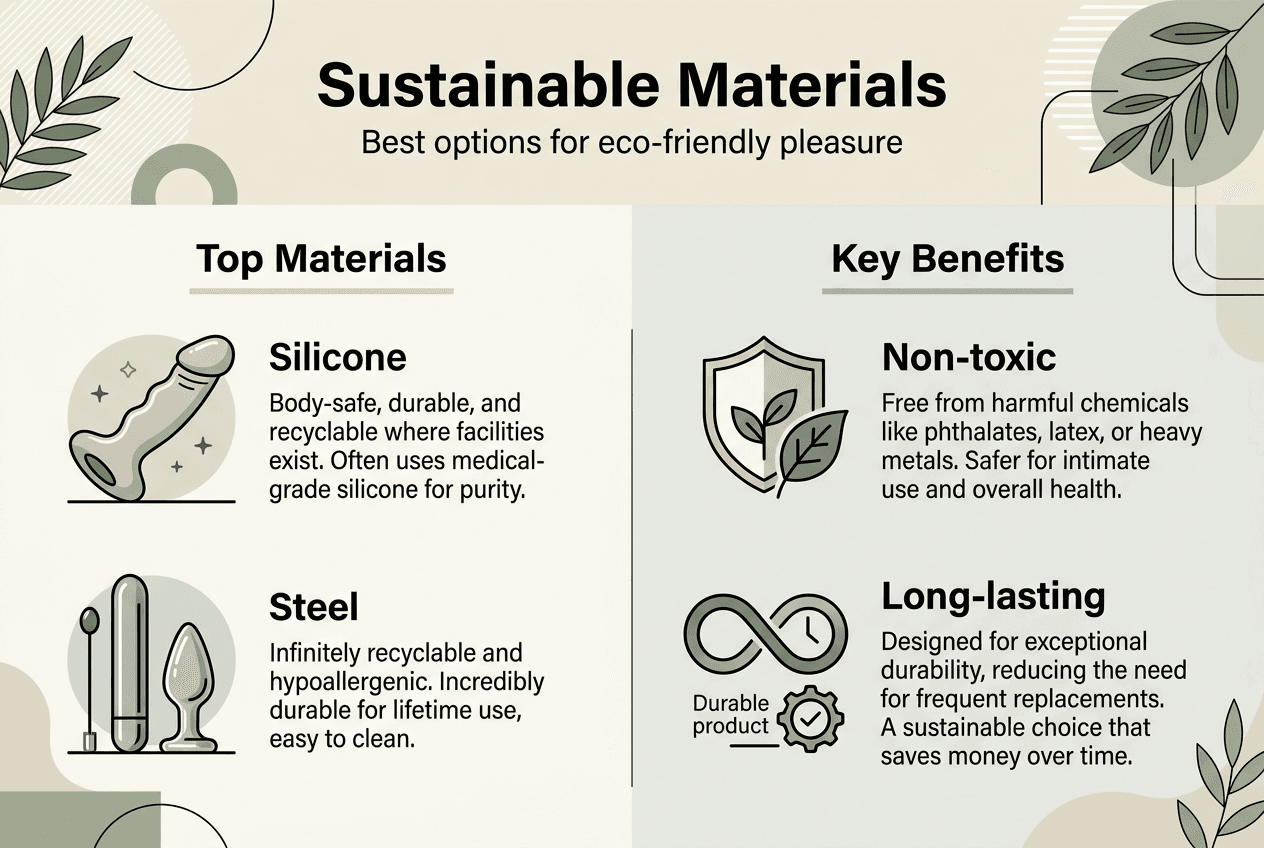
Comparing traditional versus sustainable materials reveals stark differences in environmental and health impacts:
| Material Type | Environmental Impact | User Safety | Durability | | — | — | — | | Traditional PVC/Jelly | High petroleum use, toxic additives, non-recyclable | Contains phthalates and allergens | Degrades quickly, 1-2 years | | Medical-Grade Silicone | Moderate production impact, long-lasting, difficult to recycle | Non-toxic, hypoallergenic, body-safe | Excellent durability, 5-10+ years | | Stainless Steel/Glass | Energy-intensive production, fully recyclable | Completely inert, no chemical leaching | Virtually indestructible with proper care | | Bio-Based Polymers | Renewable resources, biodegradable potential | Generally safe, testing ongoing | Moderate durability, 3-5 years |
Emerging brands focusing on sustainability and transparency are reshaping consumer expectations. Companies like these prioritize ingredient disclosure, publish sustainability reports, and actively engage with environmental organizations to improve practices. This transparency builds trust and pressures larger manufacturers to adopt similar standards. As consumer awareness grows, market demand increasingly favors brands demonstrating genuine commitment over those offering superficial green marketing.
Pro Tip: When selecting innovative products like the ultra realistic vibrating vagina or silicone anal plug 12 modes, verify material certifications and ask manufacturers about their sustainability initiatives to balance pleasure with planetary care effectively.
Future trends point toward circular economy models where manufacturers design for disassembly, repair, and material recovery. Some visionary companies explore modular systems allowing you to upgrade motors or change textures without replacing entire products. Others investigate partnerships with recycling facilities to process returned toys properly. These systemic approaches recognize that true sustainability requires rethinking product lifecycles from design through disposal.
Technology integration offers additional sustainability opportunities. Smart toys with app connectivity can provide usage analytics helping you optimize battery life and predict maintenance needs before failures occur. Solar-charging options for rechargeable toys eliminate grid electricity dependence. While still niche in 2026, these innovations demonstrate how technology can enhance rather than compromise environmental goals when thoughtfully implemented.
Explore sustainable intimacy products at Intimate Elegance
Ready to put your knowledge into action? Intimate Elegance offers a carefully curated selection of sustainable and ethical sex toys that meet the standards discussed throughout this guide. Our collection features products crafted from body-safe materials like medical-grade silicone and stainless steel, ensuring your intimate experiences align with your environmental values without compromising on quality or pleasure.

Discover innovative options like the silicone anal plug 12 vibration modes or the ultra realistic vibrating vagina, both designed with durability and safety in mind. Browse our full range at Intimate Elegance where you’ll find detailed product information, transparent material sourcing, and expert guidance to help you make informed, sustainable choices. We prioritize discreet shipping and secure transactions, ensuring your privacy while you shop responsibly for intimate wellness.
What questions do people ask about sustainable sex toys?
Are sustainable sex toys safe for sensitive skin?
Yes, sustainable sex toys typically offer superior safety for sensitive skin because they avoid harsh chemicals and allergens. Medical-grade silicone, glass, and stainless steel are hypoallergenic and non-porous, preventing bacterial growth and irritation. Always verify products are free from phthalates, latex, and synthetic fragrances if you have known sensitivities.
How can I tell if a sex toy is truly eco-friendly?
Look for specific material disclosures, third-party certifications like OEKO-TEX, and transparent manufacturing information from the brand. Genuine eco-friendly toys specify exact materials used and provide verifiable sustainability credentials rather than vague marketing claims. Research the company’s overall practices and read independent reviews to confirm their commitment extends beyond surface-level green messaging.
What is the lifespan of sustainable sex toys compared to traditional ones?
Sustainable sex toys typically last significantly longer than traditional options, often 5 to 10 years or more with proper care. Materials like medical-grade silicone and stainless steel resist degradation that affects cheaper alternatives within 1 to 2 years. This extended durability reduces replacement frequency, ultimately decreasing environmental impact despite potentially higher upfront costs.
Can I recycle my sex toys?
Recycling sex toys depends on materials and local facilities, as many municipal programs don’t accept them due to electronic components. Some manufacturers offer take-back programs for responsible disposal or recycling. Separate removable batteries for e-waste recycling, and check if glass or metal components qualify for standard recycling streams in your area.
Which materials should I avoid to be more eco-conscious?
Avoid PVC, jelly rubber, and products containing phthalates, as these materials rely on petroleum, contain toxic additives, and resist biodegradation. Skip toys with excessive plastic packaging or non-rechargeable batteries that create unnecessary waste. Instead, choose medical-grade silicone, glass, stainless steel, or certified bio-based materials from transparent manufacturers committed to sustainable practices.
Recommended
- Why You Should Always Use Lubricant with Adult Toys – Intimate Elegance
- Bedeutung erotikprodukte: mehr nähe und modernes verständnis 2026 – Intimate Elegance
- Best Vibrators for Beginners — How to Choose the Perfect Model – Intimate Elegance
- Wie benutzt man Vibratoren richtig: Leitfaden 2026 – Intimate Elegance