

Intimate self-care: Enhance pleasure and wellness holistically
Self-care has a reputation problem. For most people, it conjures images of bubble baths, face masks, and herbal tea. These rituals have their place, but they only scratch the surface of what genuine well-being looks like. Intimate self-care goes further, nurturing your sexual, emotional, and physical health in ways that standard routines simply cannot reach. This guide will show you exactly what intimate self-care means, why it matters for complete wellness, and how to build a practice that feels both natural and deeply rewarding.
Table of Contents
- Defining intimate self-care: More than just relaxation
- Core practices and methodologies for intimate self-care
- How intimate self-care enhances pleasure, relationships, and overall health
- Safety, consent, and adapting to personal needs
- Getting started: Simple steps to begin or upgrade your intimate self-care
- Explore pleasure and wellness with Intimate Elegance
- Frequently asked questions
Key Takeaways
| Point | Details |
|---|---|
| Intimate self-care defined | It means nurturing your pleasure, emotional, and sexual well-being as part of wellness. |
| Proven benefits | Regular practice boosts satisfaction, intimacy, and overall health, for solos and couples. |
| Safe adaptation | Customise routines for body needs, safety, and consent, using guidance for every stage of life. |
| Small steps matter | Beginning with just a few minutes daily leads to major gains in pleasure and self-connection. |
| Quality tools help | Luxurious products and well-chosen rituals can further elevate your self-care experience. |
Defining intimate self-care: More than just relaxation
Now that we’ve broadened the idea of self-care, let’s clarify what truly sets intimate self-care apart.
At its core, intimate self-care is the proactive practice of nurturing one’s sexual, emotional, and physical well-being through personal pleasure exploration, body connection, and wellness routines. It is not a niche concept reserved for therapists or wellness influencers. It is a fundamental part of living well.
General self-care and intimate self-care share a common goal, but they operate on different levels. Understanding the distinction helps you see what might be missing from your current routine.
| General self-care | Intimate self-care |
|---|---|
| Focuses on mood and relaxation | Focuses on pleasure and eroticism |
| Includes sleep, nutrition, exercise | Includes sensory rituals, mindful touch |
| Addresses emotional soothing | Addresses sexual and relational needs |
| Often practised publicly or socially | Typically private and deeply personal |
| Targets stress reduction | Targets desire, connection, and fulfilment |
The pillars of self-care recognised by wellness science include physical, emotional, social, and spiritual dimensions. Intimate self-care sits at the intersection of all four. It is not an add-on. It is a pillar in its own right.
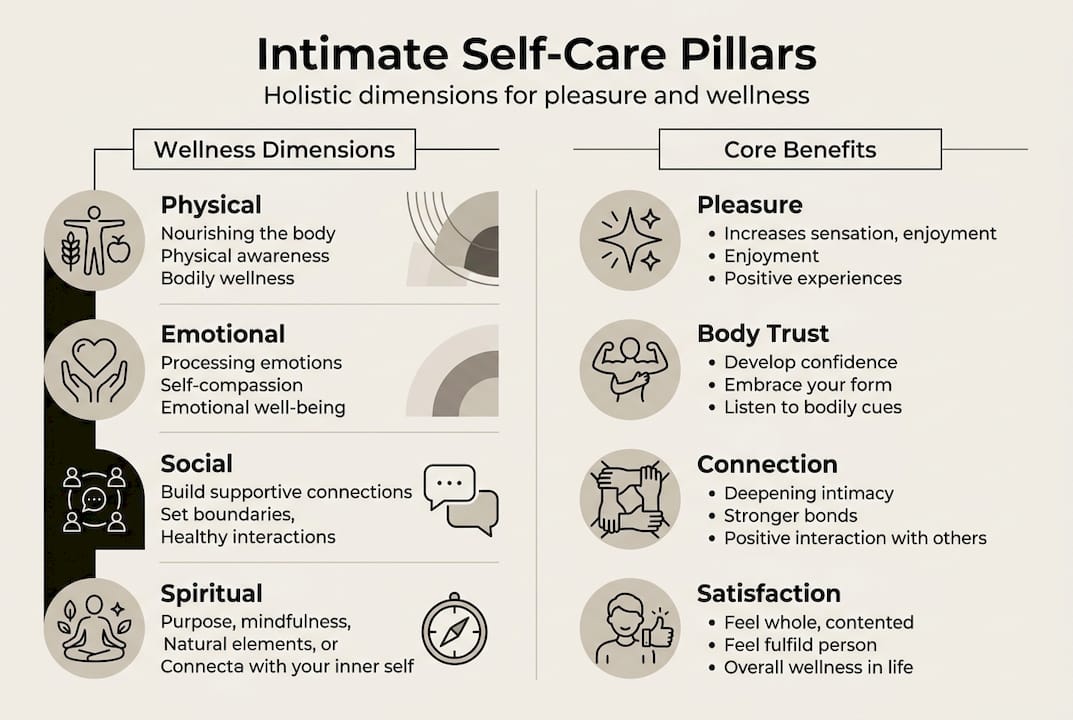
Esther Perel, one of the world’s leading voices on intimacy, puts it plainly: eroticism belongs in wellness. General self-care focuses on emotional soothing and discipline, while intimate self-care brings erotic and sexual pleasure into holistic wellness. Ignoring this dimension leaves a significant gap in your overall health.
If you want a structured starting point, our sexual wellness checklist is a practical tool for assessing where you currently stand and where you might want to grow.
Core practices and methodologies for intimate self-care
With the definition clear, how is intimate self-care put into practice, both alone and as a couple?

Mindful masturbation, sensate focus, slow sensory exploration, and luxury adult products are among the core methodologies. Each one can be adapted to your comfort level, experience, and personal goals.
Here are the key practices worth exploring:
- Mindful masturbation: Slow, intentional solo touch that focuses on sensation rather than outcome. This builds body awareness and self-knowledge.
- Body scan meditation: A practice of mentally moving through each part of your body, noticing tension, pleasure, or numbness without judgement.
- Sensory rituals: Creating an environment that engages all five senses, such as soft lighting, scented candles, and comfortable textures, before any intimate practice.
- Sensate focus: A partnered technique where touch is exploratory rather than goal-oriented, reducing performance pressure and deepening connection.
- Non-genital touch: Deliberate, affectionate physical contact between partners that builds trust and intimacy without expectation.
- Luxury product exploration: Incorporating well-designed adult products to enhance sensation and variety. Knowing the types of sex toys available helps you make informed, confident choices.
A recent study on sexual mindfulness found that sexual mindfulness increases satisfaction by 36.4%, and trauma-informed somatic practices show an 81% client-reported improvement in well-being. These are not trivial numbers. They reflect real, measurable change in people’s lives.
Our sex toy guide is an excellent resource if you are new to incorporating products into your routine. For those ready to invest in quality, a luxury vibrator crafted from body-safe silicone is a worthwhile starting point.
Pro Tip: You do not need an hour-long ritual to benefit. Start with just five minutes of intentional body awareness each day. Consistency matters far more than duration, especially in the early stages of building a new practice.
How intimate self-care enhances pleasure, relationships, and overall health
Having covered the foundations and methodologies, what results can you actually expect from true intimate self-care?
Empirical data shows that sexual mindfulness increases satisfaction, improves orgasmic function, and boosts both the frequency and duration of sexual activity. These benefits extend well beyond the bedroom.
“Sexual mindfulness increases satisfaction by 36.4% and trauma-informed practices show an 81% client-reported improvement.” — Sexual Mindfulness and Somatic Practices, 2025
Here are the four most significant benefits, backed by research:
- Deeper emotional intimacy: Regular intimate self-care, whether solo or partnered, builds self-awareness and empathy. You become more attuned to your own needs, which makes communicating them to a partner far easier.
- Reduced stress and anxiety: Physical pleasure triggers the release of oxytocin and endorphins, both of which lower cortisol levels. Even brief moments of mindful touch can shift your nervous system into a calmer state.
- Improved relationship satisfaction: Couples who practise shared rituals report stronger bonds. 20-second hugs and 6-second kisses daily release bonding hormones that reinforce connection over time.
- Enhanced desire and pleasure: Consistent intimate self-care recalibrates your relationship with your own body, often reigniting desire that stress or routine had dulled.
The data below illustrates what regular practice can look like over time:
| Measure | Before regular practice | After regular practice |
|---|---|---|
| Sexual satisfaction | Low to moderate | Significantly increased |
| Desire and arousal | Inconsistent | More frequent and reliable |
| Orgasmic function | Variable | Improved and more consistent |
| Relationship closeness | Strained or neutral | Noticeably stronger |
| Anxiety around intimacy | High | Reduced |
For couples specifically, adult toys enhance relationships by introducing novelty and shared exploration. If you are curious about partnered options, our guide to stimulators for couples covers a wide range of approaches. Sexual mindfulness research continues to confirm that these benefits are accessible to virtually everyone, regardless of relationship status or experience level.
Safety, consent, and adapting to personal needs
All routines should be enjoyable and safe, so let’s cover how to honour consent, body needs, and special circumstances.
Consent and body safety must always come first. This applies to solo practice just as much as partnered activity. Knowing your own boundaries, and respecting them, is the foundation of any meaningful intimate self-care routine.
Certain life stages and circumstances require thoughtful adaptation. Postpartum women, older adults, trauma survivors, and those navigating hormonal changes all benefit from modified approaches that prioritise comfort and gradual progression over performance or expectation.
Key safety and adaptation tips to keep in mind:
- Prioritise pH balance: Use products specifically designed for intimate use. Avoid fragranced items near sensitive areas.
- Stay hydrated: Hormonal changes, particularly during menopause or postpartum recovery, can affect natural lubrication. A quality lubricant makes a significant difference.
- Use non-pressure touch: Especially for trauma survivors, beginning with non-sexual, affirming touch helps rebuild a positive relationship with the body.
- Choose body-safe materials: Silicone, glass, and stainless steel are non-porous and easy to clean. Our guide to choosing safe sex toys explains what to look for.
- Clean products thoroughly: Follow manufacturer guidelines after every use. Our sex toy safety tips cover hygiene in detail.
- Consider sustainability: If environmental impact matters to you, our overview of eco-friendly sex toys highlights responsible options.
The expanding self-care conversation increasingly recognises that intimate wellness is inseparable from overall health. Treating it with the same care and intentionality you give to nutrition or sleep is not indulgent. It is sensible.
Pro Tip: Before starting any new intimate practice, spend five minutes journalling about your current comfort levels and any boundaries you want to honour. Revisit these notes weekly. You will be surprised how quickly your awareness and confidence grow.
Getting started: Simple steps to begin or upgrade your intimate self-care
Ready to experience the benefits for yourself? Here are practical ways to start or enhance your own intimate self-care practice.
Beginning with 5-minute body scans or solo touch and tracking your changes over time is one of the most effective ways to build momentum. Small, consistent steps create lasting habits far more reliably than ambitious routines that fade after a week.
- Start with a body scan: Lie down comfortably and spend five minutes mentally moving through your body from head to toe. Notice sensation, tension, and areas of ease. No action required, just awareness.
- Set the mood deliberately: Choose a time when you will not be interrupted. Dim the lights, play music you enjoy, and remove distractions. Environment shapes experience more than most people realise.
- Practise mindful touch: Begin with non-sexual self-massage, focusing on areas like your hands, neck, or feet. Gradually expand your comfort zone at your own pace.
- Journal your progress: After each session, write two or three sentences about what you noticed. This builds self-knowledge and keeps you motivated as you observe genuine change.
- Upgrade gradually: Once you feel comfortable with the basics, consider introducing a new product or a partnered ritual. Our intimate shopping checklist helps you make thoughtful, informed choices rather than impulsive ones.
For couples, combining solo and partnered steps avoids the common trap of one partner feeling pressured. Each person develops their own comfort and awareness first, which makes shared exploration far more rewarding.
Understanding what self-care really means in its fullest sense is the first shift. Everything else follows naturally from that.
Pro Tip: Several wellness apps now include intimacy and body awareness modules. Using a simple quiz or tracker to measure your comfort and satisfaction over four to six weeks gives you concrete evidence of your own progress, which is genuinely motivating.
Explore pleasure and wellness with Intimate Elegance
Building an intimate self-care practice is one of the most rewarding investments you can make in your own well-being. The right tools make that journey more enjoyable, more varied, and more effective.

At Intimate Elegance, every product in our curated collection is chosen with quality, body safety, and genuine pleasure in mind. Whether you are just beginning or looking to enrich an existing routine, our range covers everything from solo essentials to partnered accessories. For a touch of sensory luxury, a lace mask for sensual rituals adds an elegant dimension to mood-setting. Couples exploring shared play will find our intimacy dice for couples a playful and low-pressure way to introduce new experiences. All orders ship discreetly across the EU, with secure transactions and complete privacy guaranteed.
Frequently asked questions
How is intimate self-care different from general self-care?
Intimate self-care specifically nurtures sexual and emotional pleasure, while general self-care focuses on relaxation and mood. General self-care soothes emotionally; intimate self-care extends that to sexual pleasure as a core part of holistic wellness.
Can intimate self-care improve my relationship?
Yes, shared rituals and honest communication help couples boost intimacy, mutual pleasure, and satisfaction. Couples benefit from shared rituals and open communication that strengthen both pleasure and emotional bonding.
Are sex toys necessary for intimate self-care?
No, but luxury toys can meaningfully enhance the experience. Mindful touch and mood-setting are equally important foundations, and products are simply one option among many.
How do I ensure safety during intimate self-care?
Always put consent, comfort, and product hygiene first, adapting routines for specific needs such as postpartum recovery or hormonal changes. Body safety and consent are the most critical foundation for any enjoyable intimate self-care practice.
What are good starting steps for beginners?
Begin with a short body scan or gentle touch, then add mood elements and journalling for reflection. Starting with 5-minute daily practices such as body scans or solo touch, and observing your comfort and progress, is the most effective approach for building confidence gradually.