

How to clean adult toys: safe methods by material
TL;DR:
- Proper cleaning of adult toys is crucial for maintaining sexual health and prolonging their lifespan, with methods depending on the material. Non-porous toys like silicone, glass, and stainless steel can be fully sanitized through boiling or thorough washing, while porous materials such as TPE and jelly require surface cleaning and should be barrier-protected when shared. Consistent drying, individual storage, and understanding material-specific guidelines are essential to ensure safety and prevent bacterial contamination.
Cleaning adult toys correctly is the single most important habit for protecting your sexual health and extending the life of your collection. The right approach to cleaning sex toys depends entirely on what they are made from. Silicone, glass, and stainless steel each tolerate different methods, while porous materials like TPE and jelly require a more cautious routine. This guide covers every material type, step-by-step cleaning instructions, safe toy cleaning methods for shared use, and the storage practices that prevent bacterial growth between sessions.
How to clean adult toys: why material is everything
The material your toy is made from determines every cleaning decision you make. Get this wrong and you risk either harbouring bacteria or destroying the toy itself.
Adult toys fall into two broad categories: non-porous and porous. Non-porous materials, including body-safe silicone, borosilicate glass, stainless steel, and hard ABS plastic, do not absorb fluids or bacteria. This means they can be fully sanitised and, in many cases, sterilised. Porous materials, including TPE, jelly rubber, latex, and leather, contain microscopic channels that trap bacteria even after cleaning. No amount of washing fully sterilises a porous toy.
Here is how to identify what you have:
- Silicone: Smooth, slightly matte finish, flexible but firm. Body-safe silicone is odourless.
- Glass or stainless steel: Hard, heavy, and completely rigid. Both are non-porous and highly durable.
- ABS plastic: Rigid, lightweight, and usually found in vibrator casings. Non-porous and safe to clean thoroughly.
- TPE or jelly: Softer, often translucent, and may have a faint chemical smell. These are porous.
- Leather: Used in restraints and harnesses. Always porous and requires specialist care.
Electronic components change the rules entirely. A silicone vibrator is technically non-porous, but its motor and charging port mean it cannot be submerged or boiled. Electronic toys require surface cleaning only, regardless of the outer material.
Pro Tip: Check the manufacturer’s website or product packaging for the exact material. If the listing simply says “soft material” without specifying, treat the toy as porous.
Step-by-step cleaning methods for every toy type
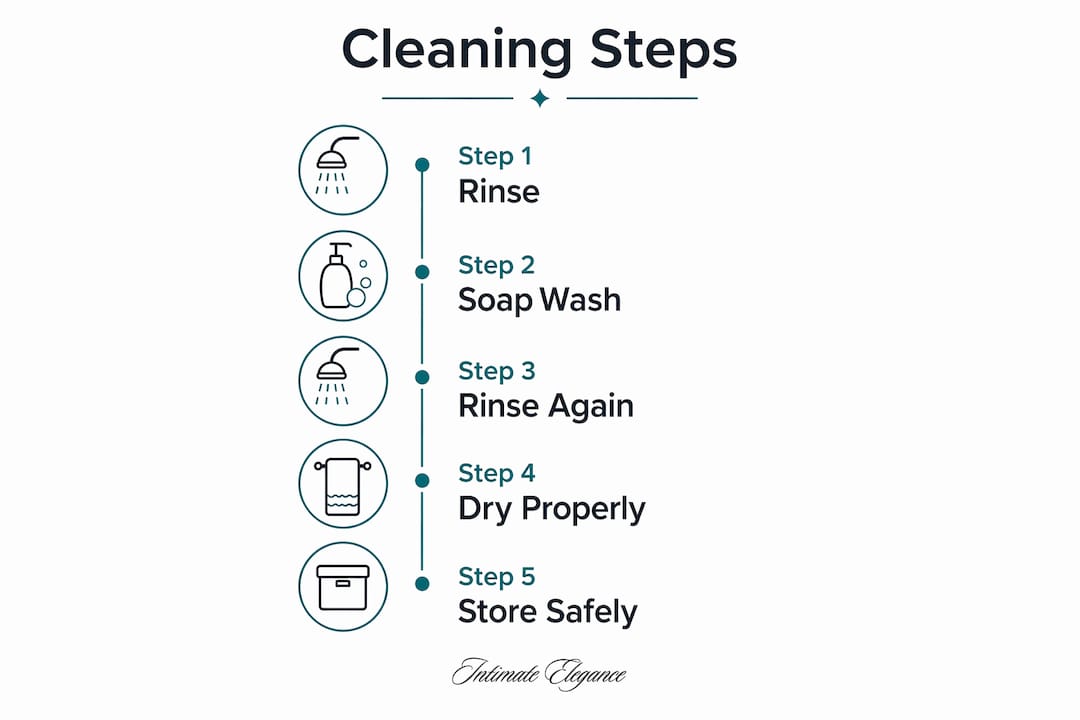
The general rule across all toy types is to clean before and after every use. Warm water between 30 and 40°C combined with a mild, fragrance-free soap is the baseline method for non-porous toys. Scented soaps and harsh detergents can irritate sensitive skin and degrade certain materials over time.
Cleaning non-porous, non-electronic toys
These are the easiest toys to clean properly and the only category where full sterilisation is achievable at home.
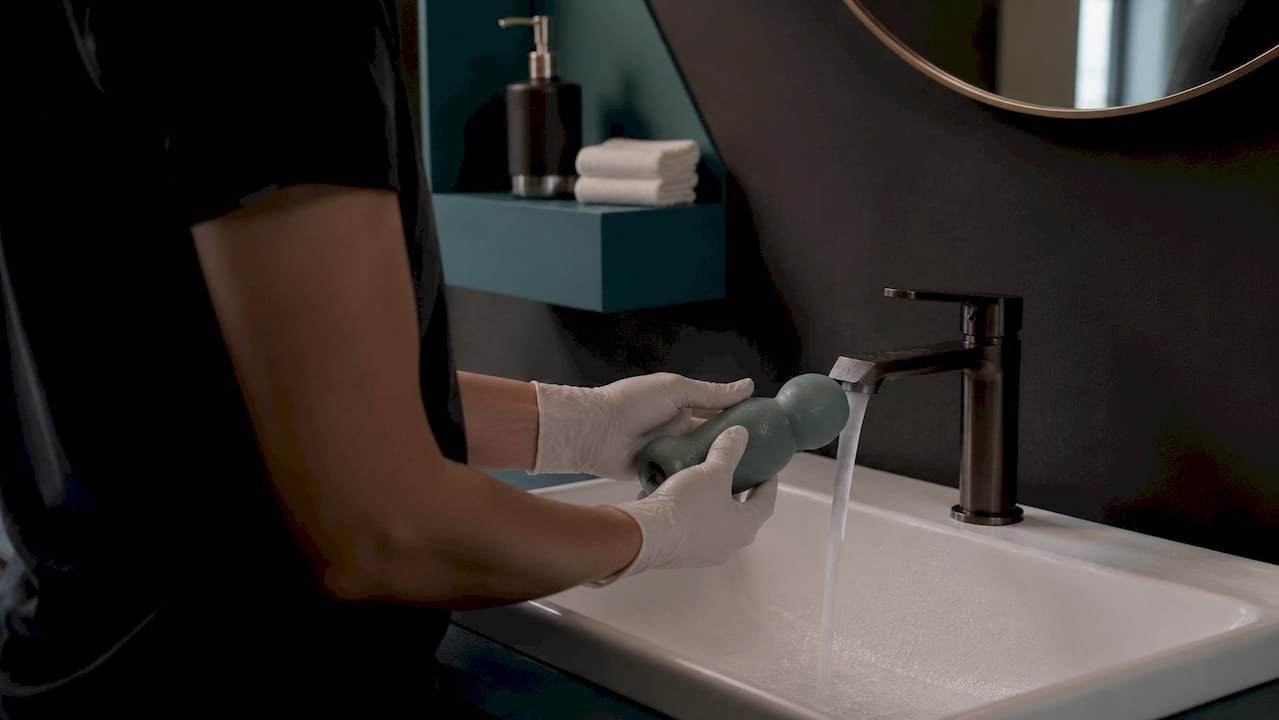
- Rinse the toy under warm running water immediately after use.
- Apply a small amount of mild, fragrance-free soap and work it across all surfaces for at least 20 seconds.
- Rinse thoroughly to remove all soap residue.
- For deeper sanitisation, particularly after anal play, place the toy in boiling water for 3 to 10 minutes. Boiling non-porous toys is one of the most effective sterilisation methods available at home.
- Alternatively, some dishwasher-safe toys can be run through a high-heat cycle without detergent. Always confirm this with the manufacturer first.
Cleaning electronic and battery-powered toys
Never submerge an electronic toy, even if the packaging describes it as waterproof. Waterproof ratings refer to splash resistance during use, not sustained submersion during cleaning.
- Remove batteries or ensure the toy is switched off and unplugged.
- Dampen a clean cloth or use a specialist toy wipe and wipe all surfaces thoroughly.
- Pay particular attention to seams, ridges, and the base where fluids collect.
- Allow to air-dry completely before storing or recharging.
Cleaning porous toys
Porous materials like TPE and jelly should never be fully submerged. Surface cleaning with a damp cloth and mild soap reduces contamination but does not sterilise. For shared use, always apply a condom over porous toys before contact.
Pro Tip: If you own a porous toy you use regularly, consider replacing it every six to twelve months. Bacteria accumulate in the material over time regardless of how carefully you clean it.
Cleaning method comparison by toy type
| Toy type | Cleaning method | Can be boiled? | Submerge in water? |
|---|---|---|---|
| Silicone (non-electronic) | Soap and water, boiling | Yes | Yes |
| Glass or stainless steel | Soap and water, boiling, dishwasher | Yes | Yes |
| ABS plastic (non-electronic) | Soap and water | No | Yes |
| Electronic/vibrator | Wipe with damp cloth or toy wipe | No | No |
| TPE or jelly | Surface wipe only | No | No |
| Leather | Specialist leather cleaner | No | No |
Commercial toy cleaners are convenient for travel or quick cleans, but mild fragrance-free soap remains the most effective and safest general method. Relying solely on spray cleaners without soap and water can leave residue and miss material-specific needs. For a broader overview of safe toy materials, understanding what goes into your toys makes cleaning decisions far simpler.
How should you dry and store adult toys?
Drying is where many people unknowingly undo a thorough clean. Lint and microfibres from standard bath towels are a significant contamination source after cleaning. Those fibres cling to toy surfaces and can cause skin irritation during the next use.
The correct approach is to air-dry toys on a clean, hard surface, or pat them dry with lint-free paper towels. Give toys at least 30 minutes to dry completely before storing them. Sealing a damp toy in a pouch or box creates the warm, moist conditions that bacteria thrive in.
Storage is equally important for adult toy maintenance. Follow these guidelines:
- Store each toy individually in a breathable fabric pouch or a dedicated storage box. This prevents cross-contamination between toys and protects surfaces from scratches.
- Keep silicone toys separate from one another. Direct contact between silicone toys during storage triggers chemical reactions that cause stickiness and material degradation over time.
- Avoid direct sunlight and heat. UV exposure and temperature extremes accelerate material breakdown, particularly in silicone and TPE.
- Do not store toys in the bathroom long-term. Humidity encourages bacterial growth even on clean surfaces.
- Inspect toys regularly for cracks, sticky patches, or discolouration. Damaged toys harbour bacteria even after cleaning and should be replaced promptly.
Pro Tip: Many premium toys from brands like Lelo and We-Vibe come with their own storage pouches. Use them. They are designed for the material and size of the specific toy.
How to sanitise adult toys for shared use
Sanitisation and sterilisation are not the same thing. Sanitisation reduces the number of pathogens to a safe level. Sterilisation eliminates all microbial life. For most home use, sanitisation is the realistic and sufficient goal. Sterilisation is achievable only with non-porous, non-electronic toys through boiling or autoclave methods.
When toys are shared between partners, the risk of transmitting bacterial infections and STIs increases significantly. Here is a practical protocol for shared use:
- Clean the toy with soap and warm water before and after each partner’s use.
- For non-porous toys, follow cleaning with a 10% bleach solution (one part bleach to nine parts water), rinse thoroughly, and allow to dry completely.
- Alternatively, wipe surfaces with isopropyl alcohol wipes and allow to evaporate fully before use.
- For porous toys, use condom barriers and change the condom between partners. This is the only reliable method to prevent cross-contamination on porous materials.
- Discuss STI status openly with partners before sharing toys. This is a straightforward health conversation, not an awkward one.
For anal toy sanitisation specifically, boiling non-porous, non-motorised toys for a full 10 minutes after use is the recommended standard. The rectal environment carries a higher bacterial load, and surface cleaning alone is insufficient for toys used in anal play.
The adult toy maintenance guide from Intimate-elegance covers shared use protocols in further detail, including advice on toy care for couples who use devices together regularly.
Key takeaways
Proper adult toy hygiene requires matching your cleaning method to the toy’s material, then following through with correct drying and storage every single time.
| Point | Details |
|---|---|
| Material determines method | Non-porous toys can be fully sanitised; porous toys can only be surface-cleaned. |
| Soap and warm water is the baseline | Use mild, fragrance-free soap at 30 to 40°C before and after every use. |
| Never boil electronic toys | Boiling destroys motors and battery compartments; wipe electronic toys with a damp cloth only. |
| Dry with lint-free materials | Bath towels leave fibres that contaminate clean surfaces; use paper towels or air-dry instead. |
| Store silicone toys separately | Contact between silicone toys causes chemical reactions that degrade both materials. |
What I have learned from years of getting this wrong first
The most common mistake I see is people assuming that if a toy feels clean, it is clean. That logic works for a dinner plate. It does not work for a porous TPE toy that has been used twice a week for six months. The surface may look spotless, but the interior is a different story entirely.
The second mistake is treating “washable” as equivalent to “sterilisable.” This misunderstanding leads people either to under-clean toys they think are fine, or to boil electronic toys and destroy them. I have seen both outcomes. Neither is good.
What actually works is building a two-minute routine. Clean immediately after use, before the fluids dry and become harder to remove. Dry properly. Store individually. That is genuinely it for solo use with non-porous toys. The complexity only increases when you introduce shared use or anal play, and even then the steps are straightforward once you know your materials.
One thing I would add that most guides skip: check your toys every few months for physical damage. A small crack in a silicone toy is not just a cosmetic issue. It is a bacterial reservoir that no amount of cleaning will address. Replace damaged toys. The sex toy safety guidance at Intimate-elegance covers this in detail, and it is worth reading before you assume a worn toy is still safe to use.
The honest truth is that toy hygiene is not complicated. It just requires consistency and knowing which rules apply to which toy.
— Bartosz
Keep your collection clean with Intimate-elegance
Intimate-elegance stocks a curated range of premium adult toys made from body-safe, non-porous materials that are straightforward to clean and built to last. Every product listing includes material information so you can apply the right cleaning method from day one. Beyond the products themselves, the Intimate-elegance blog offers detailed guidance on toy hygiene and safety, covering everything from material selection to storage solutions. Whether you are building your first collection or upgrading to higher-quality pieces, Intimate-elegance provides the products and knowledge to keep your intimate life both pleasurable and safe. Browse the full range at intimate-elegance.eu.
FAQ
Can you clean all sex toys the same way?
No. The correct method depends entirely on the toy’s material. Non-porous toys like silicone and glass can be fully sanitised with soap and water or boiling, while porous materials like TPE require surface cleaning only.
How often should you clean adult toys?
Clean every toy before and after each use without exception. Even toys stored in pouches accumulate dust and should be rinsed before use if they have been stored for an extended period.
Is it safe to boil silicone sex toys?
Boiling is safe for non-porous, non-electronic silicone toys. Electronic silicone toys must never be boiled, as the heat irreparably damages motors and battery compartments.
What is the safest way to clean shared toys?
Use soap and warm water followed by a 10% bleach solution rinse for non-porous toys. For porous toys, apply a fresh condom for each partner and change it between uses.
Do commercial toy cleaners replace soap and water?
Commercial cleaners are a useful supplement, particularly for travel, but mild fragrance-free soap remains the most effective and safest general cleaning method for most toy materials.
Recommended
- Sex toy cleaning guide: hygiene, safety and longevity – Intimate Elegance
- Adult toy maintenance guide 2026: Care tips for safety – Intimate Elegance
- How to maintain sex toys: hygiene and longevity made simple – Intimate Elegance
- Best sex toy materials for safe, pleasurable choices – Intimate Elegance