

Discreet pleasure shopping workflow: your 2026 guide
TL;DR:
- A discreet shopping workflow involves privacy-focused steps at every stage, including browsing, choosing a retailer, payment, and delivery. Most privacy mistakes happen due to overlooked issues like tracking scripts, covert account creation, or using bank-linked cards, which can expose personal data. Using VPNs, anonymous payment methods, and verifying retailer policies helps ensure your adult purchases remain private and GDPR-compliant.
A discreet pleasure shopping workflow is a structured sequence of privacy-focused steps for buying adult products online while keeping your personal data, payment details, and purchase history as private as possible. Most adults assume that clicking “guest checkout” is enough. It is not. True privacy requires decisions at every stage: how you browse, which payment method you choose, how you verify packaging policies, and whether the retailer actually deletes your data after delivery. This guide covers the full process, from browser settings to doorstep delivery, using current EU privacy standards and GDPR-compliant practices as the benchmark.
What does a discreet pleasure shopping workflow actually require?
A private online purchase involves four distinct layers: browsing, retailer selection, payment, and delivery. Weakness in any one layer exposes you. The good news is that each layer has a clear, practical fix.
EU-compliant retailers display government-verified security logos confirming they meet strict data processing standards. These logos are not decorative. They signal that the retailer operates under verified privacy controls, including data minimisation and transparent processing policies. Choosing a retailer without these markers is the single most common mistake adults make when attempting anonymous shopping.
Neutral, unbranded packaging and confidential billing are the two non-negotiable delivery requirements. Confidential billing means the charge on your bank statement shows a generic company name, not the retailer’s trading name. Always confirm both policies before you add anything to your basket.
Privacy and security prerequisites before you begin
Before you visit any adult retailer, your browsing environment needs to be set up correctly. These steps take under ten minutes and protect you from the most common tracking methods.
Browsing setup:
- Use a browser set to private or incognito mode, or install a dedicated privacy-focused browser such as Firefox with uBlock Origin enabled.
- Remove tracking parameters from any URL before you visit a site. Delete everything from the “?” character onward. This blocks marketing platforms from linking your visit to your identity.
- Consider a reputable VPN service to mask your IP address, particularly if you are on a shared or workplace network.
- Block third-party cookies in your browser settings. Most modern browsers offer this as a toggle in the privacy menu.
Retailer selection:
- Confirm the retailer holds a government-verified EU safety logo or equivalent certification.
- Read the privacy policy specifically for mentions of third-party data sharing. Retailers who minimise third-party tracking protect your anonymity from the moment you land on their site.
- Check that the retailer offers guest checkout. Under GDPR, mandatory account creation is a compliance risk except in narrow circumstances. Guest checkout is the legal standard for data protection by design.
Payment and delivery:
- Identify which payment methods the retailer accepts before proceeding. Prepaid vouchers and localised payment platforms offer the strongest privacy protection.
- Confirm that packaging is neutral and unbranded, and that the billing descriptor on your statement is generic.
| Privacy layer | Prerequisite | Why it matters |
|---|---|---|
| Browsing | Private mode plus cookie blocker | Prevents tracking before you even reach checkout |
| Retailer | EU-verified privacy logo | Confirms data minimisation and GDPR compliance |
| Payment | Prepaid voucher or localised method | Decouples your identity from the transaction |
| Delivery | Neutral packaging, confidential billing | Protects privacy at the physical point of receipt |
Pro Tip: Before you visit any retailer, paste the URL into a plain text editor and manually delete the tracking string after the “?” symbol. Then copy the clean URL into your browser. This takes three seconds and removes the most common identity-linking mechanism.
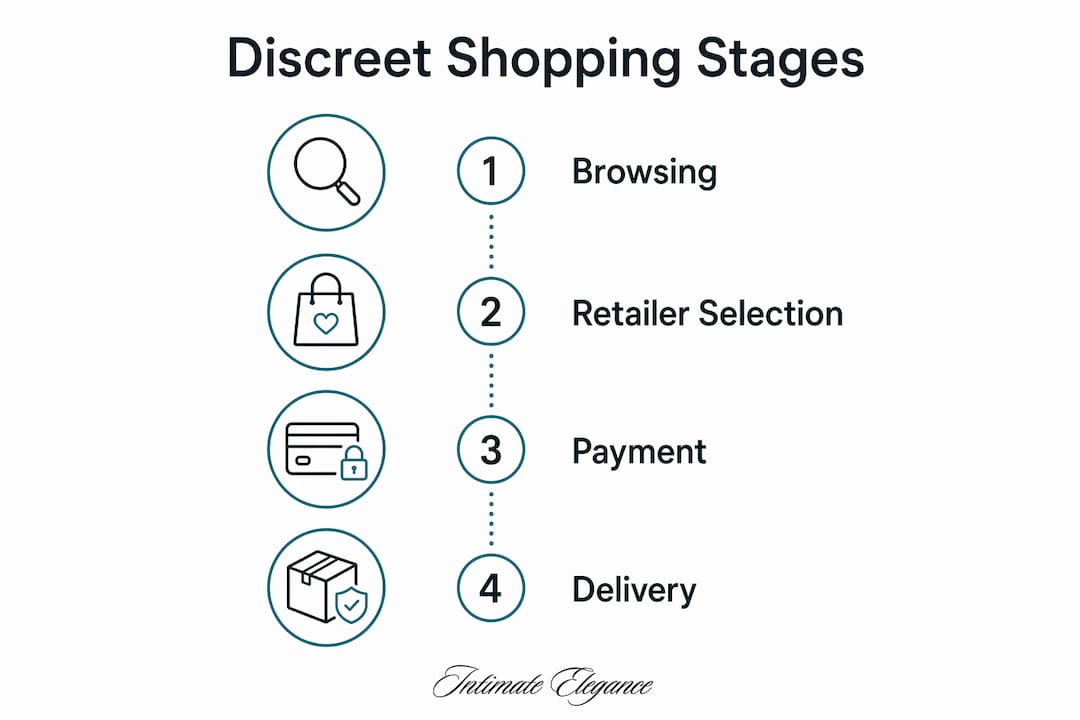
How to execute a step-by-step discreet pleasure shopping workflow
Follow these steps in order. Skipping any step creates a gap that can link your identity to your purchase.
- Clean the URL. If you arrived at the retailer via a search result, social post, or email link, strip the tracking parameters before the page loads. Delete everything from “?” onward.
- Select guest checkout. Do not create an account. Guest checkout structurally reduces the risk of dormant data retention by avoiding permanent authentication credentials.
- Verify packaging and billing policies. Find the retailer’s shipping FAQ before you select a product. Confirm neutral outer packaging and a generic billing name. Intimate-elegance, for example, ships EU-wide in plain, unbranded packaging with a discreet billing descriptor.
- Choose your payment method. Prepaid vouchers act as digital firewalls between your identity and your purchase record. They prevent targeted advertising based on your banking profile and limit the impact of any data breach. If prepaid is not available, use a localised payment platform such as PayPal with a secondary email address.
- Complete checkout with minimal data. Enter only the fields marked as required. Use a delivery address where you have sole access, such as your home rather than a shared office.
- Test for covert account creation. After your order confirmation arrives, check whether you receive a separate “account activated” or “set your password” email. Receiving such an email confirms the retailer has created a persistent profile without your explicit consent. If this happens, contact the retailer and request deletion under GDPR Article 17.
- Manage delivery communications. Use a secondary email address for order confirmations. Avoid saving delivery instructions in any account profile.
Pro Tip: Set up a free secondary email address used exclusively for online orders. This keeps purchase confirmations separate from your primary inbox and prevents cross-referencing by data brokers who aggregate email-linked purchase histories.
What are the most common pitfalls in discreet pleasure shopping?
The most damaging privacy mistakes are invisible at the time they happen. You complete checkout feeling confident, then discover weeks later that your data was retained, shared, or linked.
“The biggest threat to private pleasure shopping is not the retailer you chose. It is the invisible infrastructure around them: the analytics scripts, the retargeting pixels, and the payment processors logging your card details. A retailer can have excellent intentions and still leak your data through third-party tools embedded on their site.”
Common pitfalls and how to avoid them:
- Using a personal credit or debit card. Cards linked to your bank account create a permanent, searchable record. Prepaid payment methods isolate your identity from purchase records and limit data breach exposure.
- Ignoring third-party trackers. Many retail sites embed analytics and advertising scripts that record your browsing behaviour independently of the retailer’s own privacy policy. Use a browser extension such as uBlock Origin to block these scripts before they load.
- Assuming guest checkout is truly anonymous. Some checkout flows covertly create accounts in the background. The test is simple: if you receive an account-related email after purchase, the retailer retained your data.
- Skipping the privacy policy. A retailer’s privacy policy lists every third party they share data with. If the list includes advertising networks or data brokers, your purchase history is not private.
- Using your primary email address. Your main email address is one of the most effective identity-linking tools available to data brokers. A dedicated secondary address breaks that link.
Retailers who implement privacy-by-design principles reduce data sharing with marketing plugins at the infrastructure level. This matters because it protects you even when you forget to block a tracker manually.
How do regional payment preferences affect your shopping workflow?
Payment method choice varies significantly across EU regions, and the wrong choice for your location can increase your exposure. In the DACH region (Germany, Austria, and Switzerland), local payment habits align well with discreet transaction flows.
Germany favours PayPal and direct bank transfer (SEPA). PayPal with a secondary email address provides a useful layer of separation from your primary banking identity. SEPA transfers are traceable but do not expose card details.
Switzerland uses TWINT as its dominant mobile payment platform. TWINT transactions are processed domestically, reducing international data exposure. For adult purchases, this localised flow is preferable to an international credit card routed through a US-based processor.
Austria shows a mixed preference for cards and buy-now-pay-later (BNPL) services. BNPL platforms typically require identity verification, which reduces anonymity. Cards remain the fallback, though prepaid cards are the stronger privacy choice.
The European payment system Wero reached 600,000 users at one major bank, representing 15% of eligible customers, by june 2026. That adoption rate signals a genuine shift toward regional payment infrastructure that keeps transactions within European data jurisdictions.
| Region | Preferred discreet method | Privacy advantage | Privacy risk |
|---|---|---|---|
| Germany | PayPal (secondary account) | Separates banking identity | Linked to email address |
| Switzerland | TWINT | Domestic processing, low international exposure | Requires Swiss bank account |
| Austria | Prepaid card | Full identity decoupling | Requires physical purchase |
| EU-wide | Prepaid voucher | No banking link whatsoever | Limited retailer acceptance |
Checking a retailer’s payment options page before you browse products is worth doing. Intimate-elegance lists accepted payment methods clearly, allowing you to confirm your preferred private payment option before you commit any personal information.
Key takeaways
A discreet pleasure shopping workflow requires privacy controls at every stage: browsing, retailer selection, payment, and delivery, with no single step sufficient on its own.
| Point | Details |
|---|---|
| Clean URLs before browsing | Delete tracking parameters from links before visiting any retailer to block identity linking. |
| Guest checkout is the legal standard | GDPR treats mandatory account creation as a compliance risk; always choose guest checkout. |
| Prepaid methods decouple identity | Prepaid vouchers prevent your bank profile from being linked to your purchase history. |
| Test for covert account creation | If you receive a password or account email post-purchase, request data deletion under GDPR Article 17. |
| Regional payment methods reduce exposure | TWINT in Switzerland and PayPal in Germany keep transactions within familiar data jurisdictions. |
Why most privacy guides miss the most important step
I have spent years watching adults follow generic privacy advice and still end up with targeted ads for products they bought “anonymously.” The advice is usually correct in isolation. Use a VPN. Choose guest checkout. Pick a discreet retailer. But the guides rarely explain that these steps only work as a system.
The step most people skip is verifying guest checkout after the fact. You complete your order, feel satisfied, and move on. Then three days later, a “welcome to your new account” email arrives. That email is not a mistake. It is the retailer’s system doing exactly what it was designed to do. The only way to catch it is to watch your inbox for 48 hours after purchase. If the email arrives, you have a GDPR right to request deletion, and a good retailer will honour it without argument.
My other observation is that payment method matters far more than browser settings for most shoppers. A VPN masks your IP address. A prepaid voucher masks your financial identity. The second is harder to reverse-engineer. If you can only do one thing, buy a prepaid card.
The adult wellness industry is maturing rapidly in its approach to privacy. Retailers who take GDPR seriously are not doing it reluctantly. They are doing it because their customers demand it, and because the regulatory penalties for non-compliance are significant. That shift works in your favour, but only if you choose retailers who have genuinely built privacy into their processes rather than bolted on a cookie banner and called it done.
— Bartosz
Private shopping, premium products: what Intimate-elegance offers
Intimate-elegance ships across the EU in plain, unbranded packaging with a discreet billing descriptor on every order. The checkout process supports guest purchases without mandatory account creation, keeping your data limited to what is strictly needed to fulfil your order.
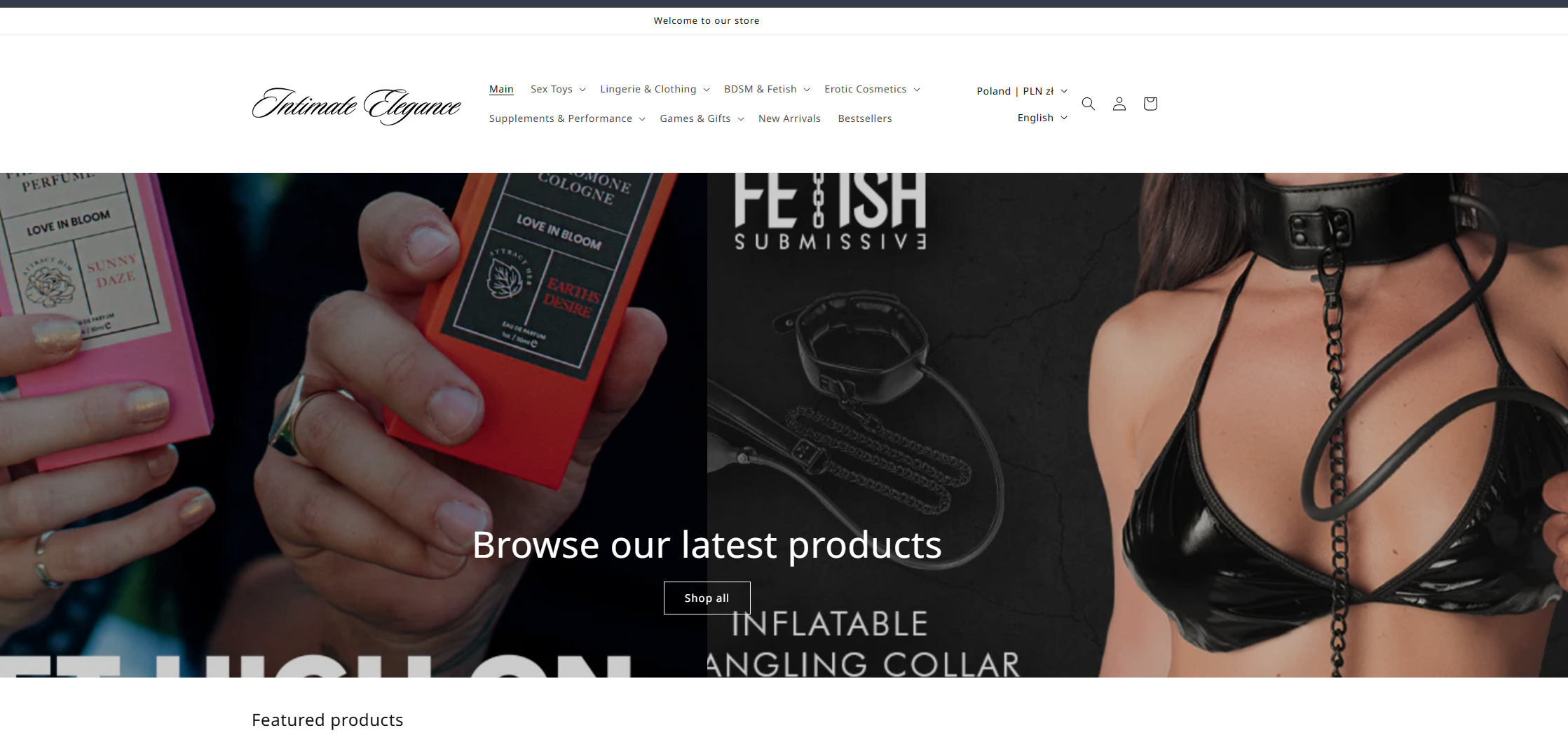
The product range covers vibrators, stimulators, couples’ accessories, and lingerie, all available through a GDPR-compliant checkout. The TOYJOY Amazing Pleasure Sex Toy Kit is a popular starting point for adults new to private pleasure shopping. It ships with full discretion and no identifying outer branding. Customer support at Intimate-elegance operates with the same privacy standards applied to orders, so any query you raise does not require you to identify your purchase publicly.
FAQ
What is a discreet pleasure shopping workflow?
A discreet pleasure shopping workflow is a structured set of privacy-focused steps for buying adult products online. It covers browsing setup, retailer selection, payment method, and delivery verification to minimise personal data exposure.
Is guest checkout truly anonymous under GDPR?
Guest checkout is the GDPR benchmark for data protection by design, but some retailers covertly create accounts in the background. Test by checking whether you receive an account-related email after purchase. If you do, request deletion under GDPR Article 17.
Which payment method is most private for adult purchases?
Prepaid vouchers offer the strongest privacy because they decouple your banking identity from your purchase record entirely. In the DACH region, TWINT in Switzerland and PayPal with a secondary account in Germany are strong alternatives.
How do I remove tracking parameters from a URL?
Delete everything from the “?” character onward in the URL before the page loads. This prevents marketing platforms from linking your visit to your identity or browsing profile.
Does neutral packaging mean my purchase is completely private?
Neutral packaging protects physical privacy at the point of delivery, but it is only one layer. Confidential billing, guest checkout, and a privacy-compliant retailer are equally necessary for a fully private purchase experience.