

Adult toy maintenance guide 2026: Care tips for safety
Improper care of adult toys leads to 60% faster material degradation and increased infection risk. Many users unknowingly damage their premium toys through incorrect cleaning methods or storage mistakes. This comprehensive guide walks you through essential maintenance steps, from selecting safe cleaning supplies to troubleshooting common care errors, ensuring your intimate products remain hygienic, functional, and pleasurable for years. You’ll learn material-specific cleaning techniques, proper storage methods, and how to spot signs of wear before they become safety hazards.
Table of Contents
- Gathering Essential Supplies For Adult Toy Maintenance
- Step-By-Step Guide To Cleaning Adult Toys Effectively
- Proper Storage And Maintenance Tips To Prolong Toy Lifespan
- Common Mistakes And Troubleshooting In Adult Toy Care
- Explore Premium Adult Toys And Maintenance Essentials At Intimate Elegance
- Frequently Asked Questions
Key takeaways
| Point | Details |
|---|---|
| Clean before and after every use | Proper cleaning prevents bacterial growth and extends toy lifespan significantly |
| Match cleaners to materials | Silicone, glass, and metal each require specific cleaning agents to avoid damage |
| Store toys separately | Keeping toys apart prevents chemical reactions that degrade materials |
| Inspect regularly for wear | Check for cracks, discoloration, or texture changes that signal replacement time |
| Avoid common mistakes | Never use harsh chemicals or submerge non-waterproof electronics |
Gathering essential supplies for adult toy maintenance
Before you begin cleaning, assembling the right supplies ensures safe and effective maintenance. Quality cleaning products protect both your health and your investment in premium toys.
Your basic maintenance kit should include mild, unscented soap, dedicated toy cleaner, soft microfiber cloths, and small brushes for textured surfaces. Avoid antibacterial soaps containing triclosan or harsh detergents that strip protective coatings. Safe cleaners and disinfectants specifically designed for adult toys are recommended for maintenance, as they balance effective sanitization with material safety.
Phthalate-free, non-toxic cleaning products are essential because porous materials can absorb chemical residues. These residues then transfer to sensitive tissues during use, potentially causing irritation or allergic reactions. Water-based toy cleaners offer the safest option for all material types, while alcohol-based sprays work well for non-porous surfaces like glass and metal.
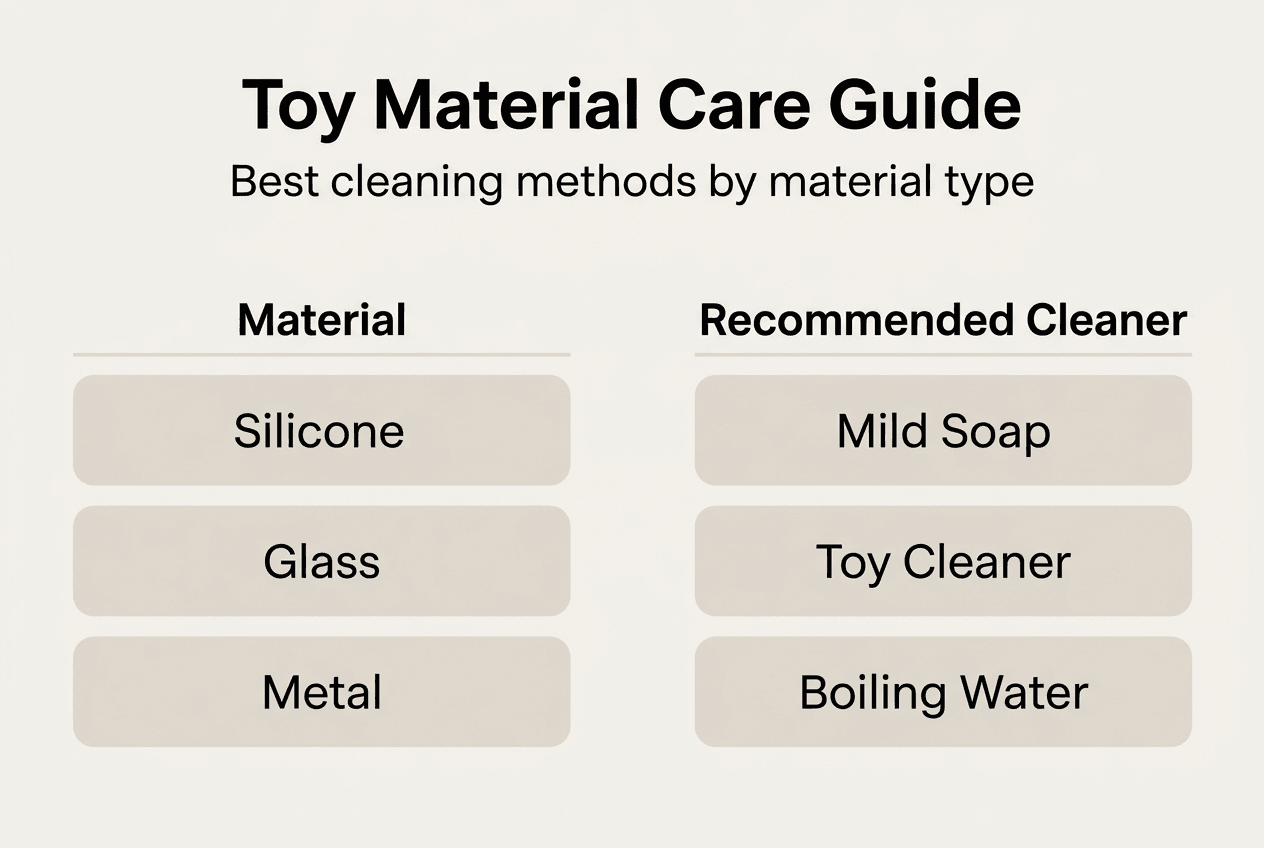
Different toy materials demand specific cleaning approaches. The table below shows which cleaning agents work best for each material type:
| Material | Recommended Cleaner | Avoid | Special Notes |
|---|---|---|---|
| Silicone | Mild soap, toy cleaner | Silicone-based products | Can be boiled if non-electronic |
| Glass | Soap, alcohol spray | Abrasive scrubbers | Dishwasher safe if solid |
| Metal | Soap, toy cleaner | Harsh chemicals | Check for coatings first |
| TPE/TPR | Gentle toy cleaner | Alcohol, boiling | More porous, needs extra care |
| Hard plastic | Soap, alcohol wipes | Acetone | Avoid soaking battery compartments |
Pro Tip: Always check manufacturer guidelines printed on packaging or included instruction sheets before using any new cleaning product, as some specialty coatings require specific care methods that differ from standard material recommendations.
Investing in quality brushes with soft bristles helps reach intricate textures and grooves where bacteria hide. Look for brushes marketed for baby bottles or medical devices, as these meet high sanitation standards. Keep these supplies in a dedicated container separate from household cleaning products to maintain hygiene and avoid cross-contamination.
Step-by-step guide to cleaning adult toys effectively
Following a systematic cleaning process ensures thorough sanitization while protecting delicate components. This method works for most toy types with minor adjustments based on specific features.
-
Remove all batteries or unplug electrical toys from charging cables. This prevents water damage to electronic components and reduces shock risk during cleaning.
-
Rinse the toy under warm running water to remove visible lubricant, bodily fluids, and surface debris. Hold non-waterproof toys carefully to keep water away from battery compartments and charging ports.
-
Apply your chosen cleaner or a small amount of mild, unscented soap to the toy’s surface. Advanced cleaning steps for vibrators are essential for hygiene, particularly around motor housings and control panels.
-
Use soft brushes to gently scrub grooves, ridges, and textured areas where bacteria accumulate. Pay special attention to seams, buttons, and any crevices in the design. Apply light pressure to avoid scratching softer materials like silicone or TPE.
-
Rinse thoroughly under warm water until all soap or cleaner residue disappears. Soap residue can cause irritation during your next use and may degrade certain materials over time.
-
Dry the toy completely with a clean, lint-free towel. Pat rather than rub to avoid creating static or leaving fabric fibers on the surface.
-
Allow the toy to air dry for 15-20 minutes in a clean area before storage. This ensures moisture trapped in small crevices evaporates completely, preventing mold growth.
Never submerge battery compartments or charging ports in water unless the manufacturer explicitly labels the toy as fully waterproof with an IPX7 rating or higher. Water damage voids warranties and creates electrical hazards.
Pro Tip: Clean your toys both before and after every use, even if they look clean. Pre-use cleaning removes dust and storage residue, while post-use cleaning prevents bacterial growth between sessions.
For toys compatible with boiling, such as solid silicone dildos without electronics, place them in boiling water for 3-5 minutes for deep sanitization. This method kills 99.9% of bacteria and viruses but should only be used monthly to avoid material stress. Always verify boiling compatibility in your product manual, as some silicone blends or painted finishes cannot withstand high temperatures.

When using lubricant during play, choose water-based formulas that rinse away easily and don’t leave sticky residues requiring harsh cleaning. Silicone-based lubricants bond with silicone toys and demand more aggressive cleaning that can shorten toy lifespan.
Proper storage and maintenance tips to prolong toy lifespan
How you store your toys between uses directly impacts their longevity and safety. Poor storage leads to material degradation, contamination, and premature replacement costs.
Follow these storage best practices:
- Keep each toy in its own storage pouch or case to prevent chemical reactions between different materials
- Store toys in a cool, dry location away from direct sunlight, which breaks down silicone and plastic polymers
- Avoid stacking toys directly on top of each other, as pressure creates deformation in softer materials
- Remove batteries from toys not used regularly to prevent corrosion from battery leakage
- Place silica gel packets in storage containers to absorb excess moisture in humid environments
- Never store toys in sealed plastic bags, which trap moisture and encourage bacterial growth
Different storage methods offer varying levels of protection. This comparison helps you choose the right approach:
| Storage Method | Protection Level | Best For | Drawbacks |
|---|---|---|---|
| Original packaging | High | Long-term storage | Takes up space |
| Fabric pouches | Medium | Daily use toys | Limited crush protection |
| Lockable boxes | High | Privacy, multiple toys | Can trap moisture |
| Hanging organizers | Low | Quick access | Dust exposure |
| Drawer dividers | Medium | Discreet storage | Requires dedicated space |
Material choice impacts durability and safe storage methods. Premium silicone toys like the Pretty Love anal plug with 12 vibration modes maintain their shape and texture longer when stored properly, while cheaper materials degrade faster under identical conditions.
Inspect your toys monthly for signs of wear or damage. Look for cracks in hard materials, sticky or tacky surfaces on silicone, discoloration, unusual odors, or rough patches on previously smooth surfaces. These warning signs indicate chemical breakdown that can harbor bacteria or cause tissue irritation.
Pro Tip: Replace any toy showing visible wear immediately, even if it still functions. Damaged toys create microscopic cuts in sensitive tissue that increase infection risk, and no amount of cleaning can restore compromised material integrity.
Rotate your toy collection regularly rather than using the same item repeatedly. This practice distributes wear across multiple toys and extends the overall lifespan of your collection. Mark purchase dates on storage containers to track each toy’s age, as most manufacturers recommend replacement every 1-2 years regardless of visible wear.
Common mistakes and troubleshooting in adult toy care
Even experienced users make maintenance errors that compromise toy safety and performance. Recognizing these mistakes helps you avoid costly damage and health risks.
Frequent maintenance mistakes include:
- Using household cleaners containing bleach, ammonia, or alcohol on porous materials
- Submerging non-waterproof toys completely during cleaning
- Storing different material types together, causing chemical reactions
- Skipping pre-use cleaning because the toy looks clean
- Applying silicone lubricant to silicone toys, which degrades the material
- Ignoring manufacturer care instructions in favor of generic advice
- Continuing to use toys with visible damage or unusual texture changes
- Sharing toys between partners without proper sanitization between uses
Poor maintenance practices increase your risk of bacterial vaginosis, yeast infections, and urinary tract infections by up to 300%. Always prioritize hygiene over convenience when caring for intimate products.
If you notice cleaning residue or persistent odors after washing, the toy may have absorbed substances into porous materials. Try soaking the toy in a 10% vinegar solution for 10 minutes, then wash thoroughly with toy cleaner. If odors persist, the material has degraded beyond safe use and requires replacement.
Cloudy or sticky surfaces on silicone toys indicate reaction with incompatible lubricants or cleaners. Using inappropriate lubricants can damage adult toys and pose health risks. Stop using the affected toy immediately and review your lubricant and cleaner choices against manufacturer recommendations.
When troubleshooting motor or vibration issues, check battery contacts for corrosion before assuming mechanical failure. Clean contacts with a cotton swab dipped in rubbing alcohol and ensure batteries are fresh. If problems continue, contact the manufacturer about warranty coverage rather than attempting repairs yourself, which can void warranties and create safety hazards.
Consult product manuals whenever you’re unsure about proper care procedures. Manufacturers provide specific guidance based on their materials and construction methods. When manuals are unavailable, contact customer service with your product name and model number for personalized care instructions. Generic advice may not account for special coatings, unique material blends, or proprietary features that require modified care approaches.
Explore premium adult toys and maintenance essentials at Intimate Elegance
Now that you understand proper toy care, choosing quality products designed for easy maintenance enhances both safety and pleasure. Intimate Elegance offers a curated selection of premium toys crafted from body-safe materials that respond well to proper care routines.

Our collection includes high-quality silicone anal plugs with multiple vibration modes, engineered for simple cleaning and long-lasting performance. Pair your toys with compatible water-based massage lubricants that rinse away cleanly without leaving residue or damaging materials. Every product includes detailed care instructions to help you maintain optimal hygiene and extend product lifespan. Explore our full range at Intimate Elegance and discover toys designed with both pleasure and practicality in mind, backed by discreet EU-wide shipping and dedicated customer support.
Frequently asked questions
How often should I clean my adult toys?
Clean your adult toys before and after every single use to prevent infections and material damage. Pre-use cleaning removes dust and storage contaminants, while post-use cleaning stops bacterial growth. Use cleaners appropriate for your specific toy material, as harsh chemicals damage porous surfaces and reduce toy lifespan.
What is the safest way to store silicone and glass toys?
Store silicone and glass toys in separate fabric pouches or rigid cases, away from direct sunlight and temperature extremes. Never let different materials touch during storage, as chemical reactions between materials cause surface degradation. Keep storage areas dry and well-ventilated to prevent moisture buildup that encourages bacterial growth.
Can I use any lubricant with my adult toys?
Always use water-based lubricants with silicone toys, as silicone-based lubes chemically bond with silicone surfaces and cause irreversible damage. Glass and metal toys work with any lubricant type, but checking compatibility labels prevents unexpected reactions. When in doubt, test a small amount on an inconspicuous area before full application.
How do I know when to replace my adult toys?
Replace toys immediately when you notice cracks, sticky surfaces, discoloration, persistent odors, or texture changes. These signs indicate material breakdown that harbors bacteria and can cause tissue irritation or infection. Most manufacturers recommend replacement every 1-2 years regardless of visible wear, as materials degrade over time even with perfect care.
Recommended
- Why You Should Always Use Lubricant with Adult Toys – Intimate Elegance
- Wie benutzt man Vibratoren richtig: Leitfaden 2026 – Intimate Elegance
- Best Vibrators for Beginners — How to Choose the Perfect Model – Intimate Elegance
- PRETTY LOVE - ANAL PLUG ANCHOR FORM SILICONE 12 VIBRATION MODES BLACK – Intimate Elegance